
Kirigami
What Kirigami is
Kirigami is the Japanese art of cutting paper into precise patterns and three-dimensional forms. The word joins kiru (to cut) and kami (paper). Unlike origami, which relies on folding alone, kirigami uses both folds and cuts to reveal depth, geometry, and movement in a single sheet.
The practice dates back centuries in Japan, where artisans cut paper for lanterns, screens, and ceremonial objects. Today, kirigami extends into architecture, engineering, and decorative arts; the principles shape everything from pop-up books to solar-panel arrays.
Why FOLDORI uses kirigami principles
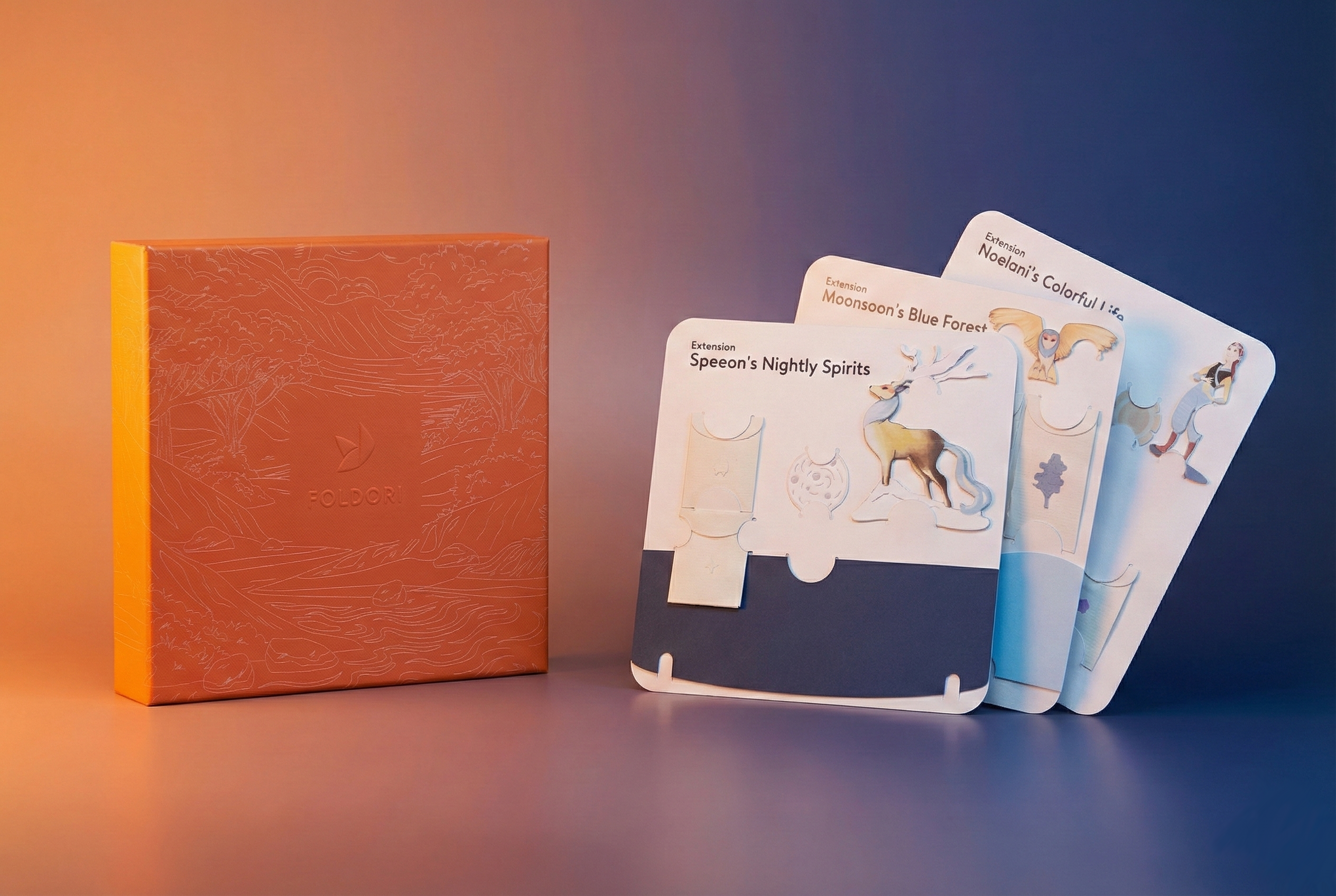
Every Sunrise Dreams set is laser-cut using kirigami discipline. We engineer each layer so that one cut creates both form and structure: a window in the paper becomes part of the scene's depth. The CO2 laser follows paths measured to the tenth of a millimeter; that precision is what makes a ten-layer diorama hold its shape without glue.
Kirigami taught us that a cut is never decorative. It defines what stays and what leaves; it controls how light moves through the paper. When you assemble a FOLDORI set, you follow cuts we designed to lock layers in place through tension alone.
Where the tradition meets our work
Traditional kirigami often uses symmetry: one fold, one cut, mirrored forms. FOLDORI's scenes are asymmetric by design. We adapt the cutting discipline but not the aesthetic; our stories require landscapes that shift as you move around them, not patterns that repeat.
The bridge between tradition and adaptation is visible in our engineering process. We respect the material's behavior (how 250-gram uncoated paper splits when cut at an angle, how fibers fray if the laser speed is wrong), and we apply that knowledge to build scenes the tradition never attempted.