
Beyond The Fold
Adult Paper Kits vs Kids Craft: What Sets Them Apart
A question comes up often: what separates a paper kit for adults from the craft sets you find in children's aisles? The answer is not about who can build it. It is about what the object asks of you, what it is made from, and how long it will last once you are done. Material quality: paper weight and fiber structure Children's craft kits ship with lightweight card stock, usually 120–180gsm, chosen because it is cheap to produce and easy to cut with scissors. The fibers are short. The edges fray after a few folds. The surface picks up fingerprints. Adult paper kits start at 250gsm. FOLDORI uses Fedrigoni Old Mill 250gsm for structural layers because the long-fiber composition holds a fold without creasing the surface. After a hundred folds, the cut edge stays clean. That is the difference between a disposable activity and an object you can handle for years. The paper grammage is not ornamental. It is what makes precision possible. A 90-degree corner in 120gsm card will buckle under tension. The same corner in 250gsm uncoated paper locks without glue, because the fiber structure supports the geometry. Kids' kits do not engineer for that. Adult kits do. Assembly complexity and time investment A typical children's paper craft takes fifteen to thirty minutes. The instructions are pictorial. The pieces snap together or use pre-applied adhesive tabs. There is no assembly tolerance; if a piece is slightly misaligned, the design compensates. An adult paper kit expects focused time. Sunrise Dreams takes under an hour to assemble. The Design Handbook is typeset on Fedrigoni Old Mill 120gsm and structured like an engineering manual. Each layer has a specific insertion sequence. The Paper Belt mechanism asks you to pre-fold each belt along its score lines, then thread it through its slits in a set order; the ivory spacer strips go on the back of each layer, along the marked lines. If you skip a step or reverse the order, the structure will not lock. That is not a flaw. That is the design. The complexity is what makes the final object hold tension without external support. Children's kits avoid complexity because the goal is quick gratification. Adult kits build complexity into the experience because the goal is to show you how the thing works. Design intent: decoration versus engineering Kids' paper crafts are decorative. The design prioritizes bright colors, recognizable shapes, and visual appeal from a distance. The structure is secondary. Most children's kits use pre-printed graphics on the paper surface; you fold along dotted lines, and the image appears. Adult paper kits in the paper engineering category prioritize structure over surface decoration. FOLDORI's layer-stacking method creates depth through geometry, not printed perspective. The Sunrise Dreams diorama uses ten laser-cut layers stacked in a paper case that the Paper Belt mechanism locks square. The depth effect comes from the physical distance between layers and the way light passes through the negative space. Each layer carries an offset-printed illustration, but the depth does not rely on printed imagery. It relies on how the layers interact with each other in three-dimensional space. That is a different design philosophy. One is about what you see on the surface. The other is about what happens when flat paper becomes architecture. Intended use cases and display lifespan Children's paper crafts are activities. You build them, display them for a few days, and discard them when they get damaged. The materials are not archival. The adhesives yellow. The card stock bends if you move the piece. Adult paper kits are designed for long-term display. Sunrise Dreams stands in its own paper case. The acid-free paper resists yellowing; keep it out of direct sunlight. The glue-free assembly means you can carefully take the object apart if you need to move it. That lifespan expectation changes how you engage with the build. You take your time. You check the alignment. You handle the paper at the edges to avoid oils from your fingers transferring to the surface. The use case is not temporary decoration. It is a permanent object in your space. The line between craft and engineering The real dividing line is not age. It is whether the paper is doing structural work. In a children's craft kit, the paper is a medium for decoration. In an adult paper engineering kit, the paper is the structure itself. The folds bear load. The score angles determine whether a corner locks or collapses. The grammage determines whether the piece can support its own weight across multiple layers. FOLDORI's approach comes from that second category. We do not use the term 'craft' to describe what we make, because craft implies handwork without engineering rigor. What we ship is paper-based architecture: laser-cut components, calculated tolerances, material specs that match the geometry. If you are looking for sophisticated paper craft for adults, the question to ask is not how pretty it looks in the photos. The question is whether the designer calculated the load distribution across the folds. Adult paper kits and children's crafts use the same base material, but they ask different questions of it. One is about visual decoration and quick assembly. The other is about structural integrity and long-term display. The distinction shows up in the paper grammage, the assembly time, the design intent, and the lifespan of the finished object. If you are evaluating a paper kit, check the material spec. Check the estimated assembly time. Check whether the design relies on printed graphics or on geometric depth. Those three signals will tell you what category you are actually looking at. Related reading what is paper engineering
Read moreAdult Paper Kits: Design and Assembly | FOLDORI
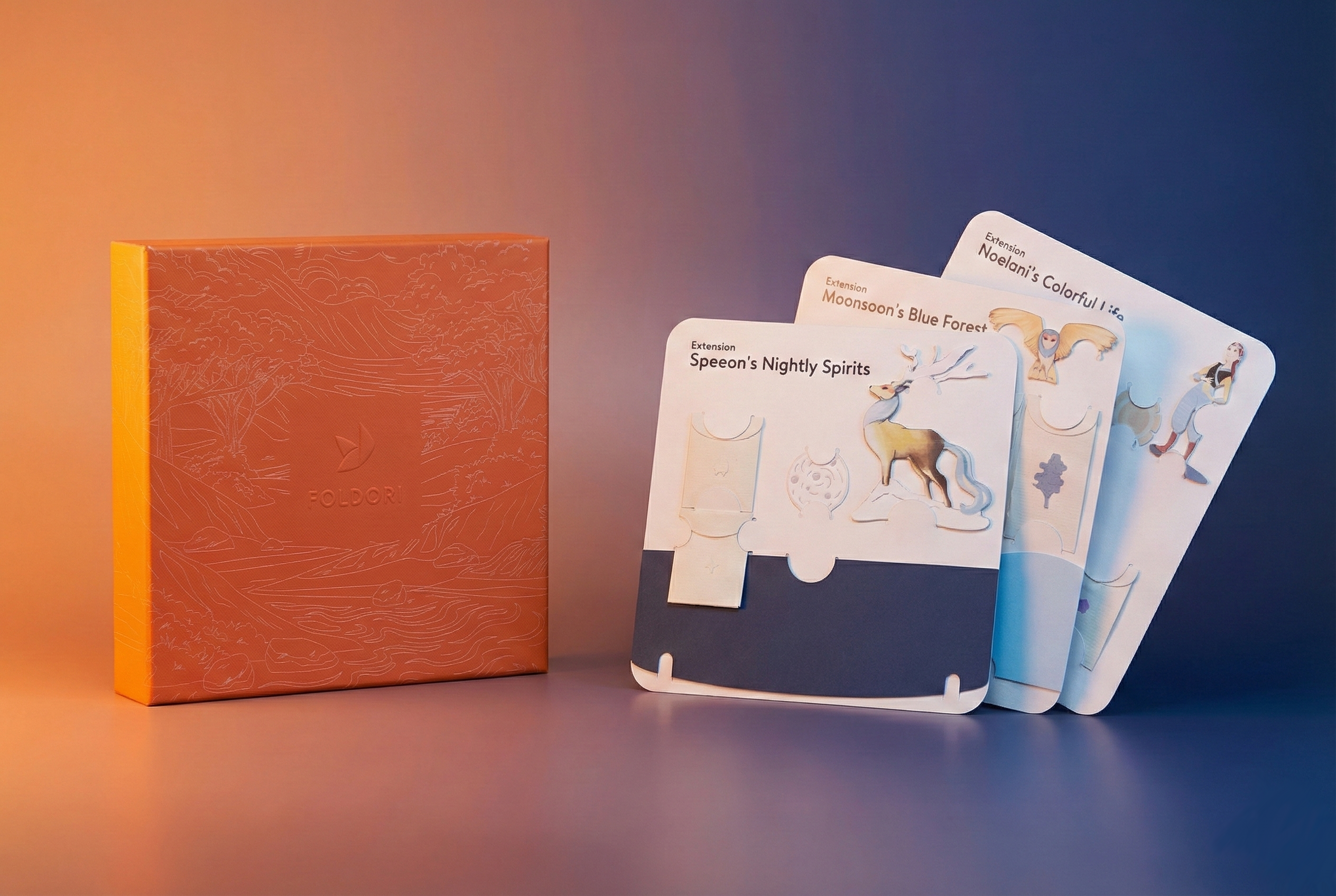
Adult paper kits occupy a category of their own. They sit between children's craft projects and fine-art sculpture, engineered for precision assembly and built to last on a shelf. Precision assembly versus play Children's craft kits forgive errors. A crooked fold still makes a recognizable shape. The goal is completion and the feeling of making something. Adult paper kits reverse that equation. The fold angle matters. Hold a FOLDORI Paper Belt at 88 degrees and the mechanism won't lock. Hold it at 92 degrees and the same thing happens. The kit demands 90. You can measure it with a square or you can feel it when the belt clicks into place. Either way, the engineering is present in your hands. The difference shows up in the finished piece. A children's kit looks handmade in the way that signals approximation. An adult kit looks handmade in the way that signals intent. The layers are tight within a millimeter because the laser cut them that way and because you placed them that way. Both facts matter. The role of Design Handbooks Every FOLDORI Classic Set ships with a Design Handbook printed on Fedrigoni Old Mill 120gsm. The handbook is not an instruction sheet. It shows you the assembly sequence in photographs, one step per page, with a companion's annotation explaining what that step accomplishes. Nicola, our learning companion, annotates the steps, because teaching the sequence correctly is Nicola's domain. The photographs show the paper from the angle you'll hold it. The annotations name the reason for each placement. If a spacer goes between layers three and four to create depth, the handbook says that. If a belt locks at a specific corner because that corner carries structural load, the handbook says that too. You can assemble a Sunrise Dreams kit by following the photographs alone. The annotations are there for the people who want to know why the structure works. That's the adult-kit model. The sequence is clear enough for a first-time builder. The engineering is clear enough for someone who cares about how paper holds tension without glue. Time investment and satisfaction curves A Sunrise Dreams Classic Set takes under an hour to assemble if you work straight through, a little longer if you take breaks. The time is structured. You finish a layer, check the handbook, place the next one. The satisfaction curve is different from a jigsaw puzzle or a model kit. With a puzzle, the last piece closes the image and the satisfaction spikes at the end. With FOLDORI, the satisfaction distributes across the sequence. You place layer four and the landscape starts to separate from the background. You lock the first Paper Belt and the corner holds without your hand supporting it. You add the foreground elements and the depth ratio becomes visible. Each step changes what you're looking at. The final placement completes the composition, but the composition was already working five steps earlier. That's the engineering doing its job. The piece rewards you for the work at each stage, so the time feels like progress rather than delay. Display-worthy finished pieces Adult paper kits are built to stay out. A children's craft project might live on a shelf for a week before moving to a drawer. A FOLDORI diorama is furniture. Sunrise Dreams is made for living rooms, office desks, entryway consoles. The piece holds visual weight because the layers create actual depth and because the uncoated paper reads as a material rather than a printout. Fedrigoni Old Mill has a tactile surface. It catches light differently depending on the angle. When you look at a finished FOLDORI piece from across a room, you see a small sculpture. When you look at it from two feet away, you see the layer edges and the engineering that holds them in place. Both reads matter. The piece works as décor and as a conversation object. People ask how it was made. That question is the signal that the category is working. Gifting considerations for milestone occasions Adult paper kits make sense as gifts when the occasion is big enough to support an hour of focused assembly. A birthday, an anniversary, a housewarming, a retirement. The recipient needs to want to spend the time, which means the gift works best when you already know they value craft or patience or small-scale building projects. FOLDORI offers gift wrapping in uncoated navy paper with a hand-tied satin ribbon, no tape. The wrapping signals that the object inside is not a quick consumable. A Sunrise Dreams kit also works as a shared activity. Two people assemble it together over an evening. That changes the experience from solo focus to collaborative problem-solving, and the finished piece becomes a record of the time spent. Or choose the Full Suite (€112), which includes the Classic Set and the three extension packs. That's a longer investment: 122 extra elements placed on the same ten layers, for a richer finished scene. The extensions let the recipient choose how much of the story to add. The Classic Set is complete on its own. The extensions expand it if the builder wants more. Adult paper kits are the category FOLDORI builds for. They combine engineering-led design with accessible assembly and produce finished pieces that earn their place in a room. The precision matters, the time investment is real, and the result is something you built with your hands that looks like it belongs on a shelf. That's the adult-kit discipline.
Read more