
Beyond The Fold
Adult Paper Kits vs Kids Craft: What Sets Them Apart
A question comes up often: what separates a paper kit for adults from the craft sets you find in children's aisles? The answer is not about who can build it. It is about what the object asks of you, what it is made from, and how long it will last once you are done. Material quality: paper weight and fiber structure Children's craft kits ship with lightweight card stock, usually 120–180gsm, chosen because it is cheap to produce and easy to cut with scissors. The fibers are short. The edges fray after a few folds. The surface picks up fingerprints. Adult paper kits start at 250gsm. FOLDORI uses Fedrigoni Old Mill 250gsm for structural layers because the long-fiber composition holds a fold without creasing the surface. After a hundred folds, the cut edge stays clean. That is the difference between a disposable activity and an object you can handle for years. The paper grammage is not ornamental. It is what makes precision possible. A 90-degree corner in 120gsm card will buckle under tension. The same corner in 250gsm uncoated paper locks without glue, because the fiber structure supports the geometry. Kids' kits do not engineer for that. Adult kits do. Assembly complexity and time investment A typical children's paper craft takes fifteen to thirty minutes. The instructions are pictorial. The pieces snap together or use pre-applied adhesive tabs. There is no assembly tolerance; if a piece is slightly misaligned, the design compensates. An adult paper kit expects focused time. Sunrise Dreams takes under an hour to assemble. The Design Handbook is typeset on Fedrigoni Old Mill 120gsm and structured like an engineering manual. Each layer has a specific insertion sequence. The Paper Belt mechanism asks you to pre-fold each belt along its score lines, then thread it through its slits in a set order; the ivory spacer strips go on the back of each layer, along the marked lines. If you skip a step or reverse the order, the structure will not lock. That is not a flaw. That is the design. The complexity is what makes the final object hold tension without external support. Children's kits avoid complexity because the goal is quick gratification. Adult kits build complexity into the experience because the goal is to show you how the thing works. Design intent: decoration versus engineering Kids' paper crafts are decorative. The design prioritizes bright colors, recognizable shapes, and visual appeal from a distance. The structure is secondary. Most children's kits use pre-printed graphics on the paper surface; you fold along dotted lines, and the image appears. Adult paper kits in the paper engineering category prioritize structure over surface decoration. FOLDORI's layer-stacking method creates depth through geometry, not printed perspective. The Sunrise Dreams diorama uses ten laser-cut layers stacked in a paper case that the Paper Belt mechanism locks square. The depth effect comes from the physical distance between layers and the way light passes through the negative space. Each layer carries an offset-printed illustration, but the depth does not rely on printed imagery. It relies on how the layers interact with each other in three-dimensional space. That is a different design philosophy. One is about what you see on the surface. The other is about what happens when flat paper becomes architecture. Intended use cases and display lifespan Children's paper crafts are activities. You build them, display them for a few days, and discard them when they get damaged. The materials are not archival. The adhesives yellow. The card stock bends if you move the piece. Adult paper kits are designed for long-term display. Sunrise Dreams stands in its own paper case. The acid-free paper resists yellowing; keep it out of direct sunlight. The glue-free assembly means you can carefully take the object apart if you need to move it. That lifespan expectation changes how you engage with the build. You take your time. You check the alignment. You handle the paper at the edges to avoid oils from your fingers transferring to the surface. The use case is not temporary decoration. It is a permanent object in your space. The line between craft and engineering The real dividing line is not age. It is whether the paper is doing structural work. In a children's craft kit, the paper is a medium for decoration. In an adult paper engineering kit, the paper is the structure itself. The folds bear load. The score angles determine whether a corner locks or collapses. The grammage determines whether the piece can support its own weight across multiple layers. FOLDORI's approach comes from that second category. We do not use the term 'craft' to describe what we make, because craft implies handwork without engineering rigor. What we ship is paper-based architecture: laser-cut components, calculated tolerances, material specs that match the geometry. If you are looking for sophisticated paper craft for adults, the question to ask is not how pretty it looks in the photos. The question is whether the designer calculated the load distribution across the folds. Adult paper kits and children's crafts use the same base material, but they ask different questions of it. One is about visual decoration and quick assembly. The other is about structural integrity and long-term display. The distinction shows up in the paper grammage, the assembly time, the design intent, and the lifespan of the finished object. If you are evaluating a paper kit, check the material spec. Check the estimated assembly time. Check whether the design relies on printed graphics or on geometric depth. Those three signals will tell you what category you are actually looking at. Related reading what is paper engineering
Read moreEuropean Paper Craft: Art of Handmade Design | FOLDORI
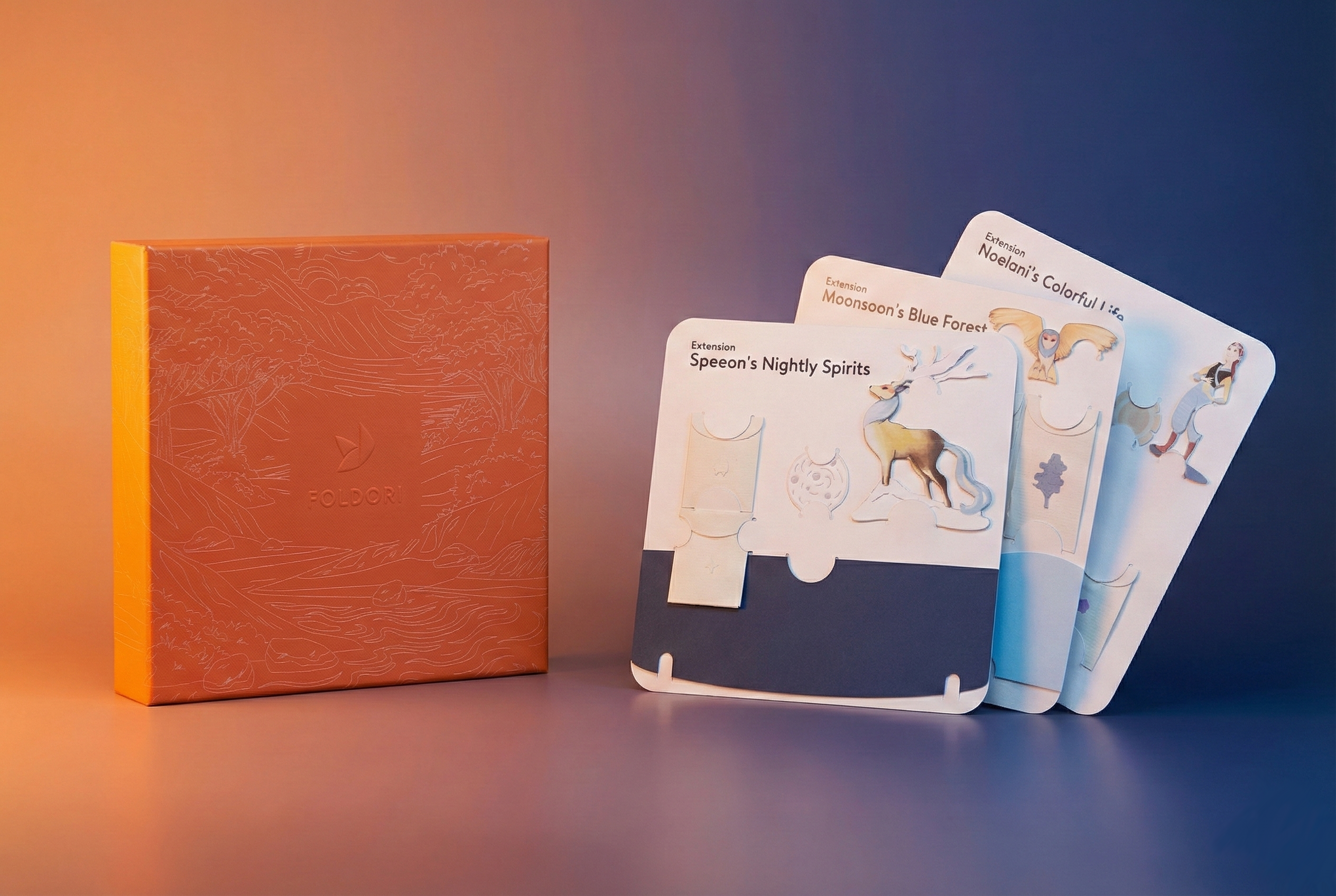
European paper craft carries centuries of artistic tradition, where precision meets creativity in every fold. At FOLDORI, we honor this heritage through layered paper art that you finish with your own hands: laser-cut, offset-printed layers of acid-free European paper that become a story-driven diorama. Each creation tells a story of patience, skill, and the timeless appeal of working with your hands. The Heritage of European Paper Craft Paper craft in Europe has evolved over centuries, from silhouette cutting to contemporary artistic expression. While origami originated in Asia, European artisans have developed their own distinctive approach, emphasizing architectural precision and narrative depth. This cross-cultural exchange enriches the craft, allowing us to blend Eastern folding techniques with Western storytelling traditions. Speeon's Nightly Spirits extension, for instance, brings the mystery of moonlit nights into the Silvia Forest. The craft demands more than technical skill. It requires an understanding of paper's character, how different weights and textures respond to pressure, and how light plays across finished surfaces. Why Handcrafted Paper Art Matters Today In an age of digital overload, handcrafted paper art offers something genuinely different. There's an honesty to paper craft that resonates with people seeking authentic experiences. When you hold a finished FOLDORI piece, you're holding your own focused work: under an hour of decisions made layer by layer. The engineering is done for you; the finishing is personal. Noelani, the adventurous girl of Sunrise Dreams, embodies this approachable spirit, reminding us that craft should feel inviting, not intimidating. Paper craft also connects us to material reality. You learn patience because rushing tears the paper. You develop spatial thinking because each fold affects the entire structure. These aren't abstract lessons. They're built into the practice itself. Choosing Quality Paper for Lasting Creations Not all paper works the same way. Premium paper craft begins with selecting the right material for your vision. European paper mills produce exceptional stock that holds crisp folds without cracking, maintains color vibrancy over time, and has the right weight for complex structures. Thin papers work beautifully for delicate flowers and insects. Heavier stock suits architectural forms and geometric designs. Textured papers add visual interest but can be challenging for intricate folds. The Sunrise Dreams Classic Set uses warm sunrise tones that require paper with excellent color stability, which is why we print on acid-free European paper. The paper you choose directly affects how your finished piece ages: quality materials develop character rather than simply deteriorating. Techniques That Define European Paper Craft European paper craft emphasizes clean lines and deliberate composition. Valley folds and mountain folds form the foundation, but the real artistry appears in how you sequence these basic moves. Reverse folds create dimension. Crimp folds add texture. Sink folds produce elegant curves. Each technique serves the overall design rather than existing for its own sake. Noelani's rabbits in the Colorful Life extension show how playful forms still require rigorous technique. Whimsy needs structure to work. Advanced practitioners develop personal techniques, small adjustments that become signatures. A particular way of setting creases, a preferred folding sequence, slight pressure variations that change how light catches the surface. These details separate competent work from exceptional craft. Building Your Paper Craft Practice Starting a paper craft practice means committing to the learning curve. Begin with simple forms: a basic bird, a geometric box, a flower with few petals. Master these completely before advancing. Understanding why a fold works matters more than memorizing steps. Create a dedicated workspace with good lighting and a clean, flat surface. Invest in a bone folder for sharp creases and quality cutting tools for precise edges. Keep a variety of paper types available for experimentation. Moonsoon, our wise owl, represents this patient accumulation of knowledge: wisdom comes from repeated practice, not shortcuts. Set aside regular time for your craft, even if just thirty minutes. Consistency builds skill faster than occasional long sessions. Document your progress to see improvement that daily practice makes invisible. From Hobby to Artistic Expression Paper craft can remain a pleasant hobby or evolve into serious artistic practice. The difference lies in intentionality. Artists use paper craft to explore concepts: how does a folded form express emotion? What can paper say about fragility, transformation, or permanence? They push material limits, testing how thin they can fold before tearing, how complex a pattern can become while remaining readable. Our sets demonstrate this artistic approach, where each piece balances technical execution with expressive purpose. Consider developing a signature style or theme. Maybe you're drawn to organic forms, geometric abstractions, or narrative scenes. Depth comes from exploring one direction thoroughly rather than sampling everything superficially. Share your work, accept critique, and study other artists' approaches. Artistic growth requires both solitary practice and community engagement. The Future of European Paper Craft Paper craft continues evolving as new artisans bring fresh perspectives. Digital tools now aid design planning, though the folding remains resolutely analog. Contemporary artists incorporate paper craft into mixed media work, installations, and even fashion. This expansion enriches the tradition rather than replacing it. FOLDORI looks forward while respecting heritage. We experiment with new forms and techniques, but every piece keeps the precision and the hand-finished character that define our work. The future of paper craft depends on passing skills between generations, welcoming newcomers while honoring experienced practitioners. It thrives when people value the time and attention that handcrafted objects require. As long as artists find meaning in the deliberate act of folding paper, this tradition will continue adapting and inspiring. European paper craft offers a rewarding path for anyone seeking creative expression grounded in tradition and skill. Whether you're beginning your first simple fold or developing an artistic practice, the craft rewards patience and curiosity. At FOLDORI, we celebrate this journey: each piece you finish represents our commitment to quality, artistry, and the enduring appeal of working with paper. Explore our collections and discover how centuries of tradition can become part of your own creative story.
Read moreThe Art of Paper Craft: Understanding FOLDORI Design
FOLDORI represents more than just a product. It's a celebration of artistry, craftsmanship, and the joy of creation. Each piece tells a story through carefully folded and layered paper, bringing imaginary worlds to life in stunning three-dimensional form. The Philosophy Behind FOLDORI At its core, FOLDORI engineers European paper into story-driven art objects that you finish yourself. Our techniques draw on paper arts with deep roots in Asia and Europe, such as kirigami and papercutting; the stories are our own. This combination creates pieces that are both aesthetically stunning and conceptually rich, appealing to collectors who value authenticity and artistry. Craftsmanship and Attention to Detail Every FOLDORI piece is engineered with meticulous precision. The acid-free paper is laser-cut and offset printed in Europe, and the final assembly is yours: each step requires skill, patience, and an unwavering commitment to quality. This dedication to craftsmanship is what sets FOLDORI apart in the world of collectible art. Why Collectors Choose FOLDORI Collectors are drawn to FOLDORI for its originality, sustainability, and the sense of ownership that comes with finishing a piece yourself. Each FOLDORI set is a unique expression of artistic vision, making it a meaningful addition to any collection. FOLDORI is not just about beautiful paper crafts. It's about supporting authentic artistry and becoming part of a community that values craftsmanship and creativity. Every piece you own is a story waiting to be told.
Read more