
Beyond The Fold
Elevate Your Space with Visual Paper Craft Design
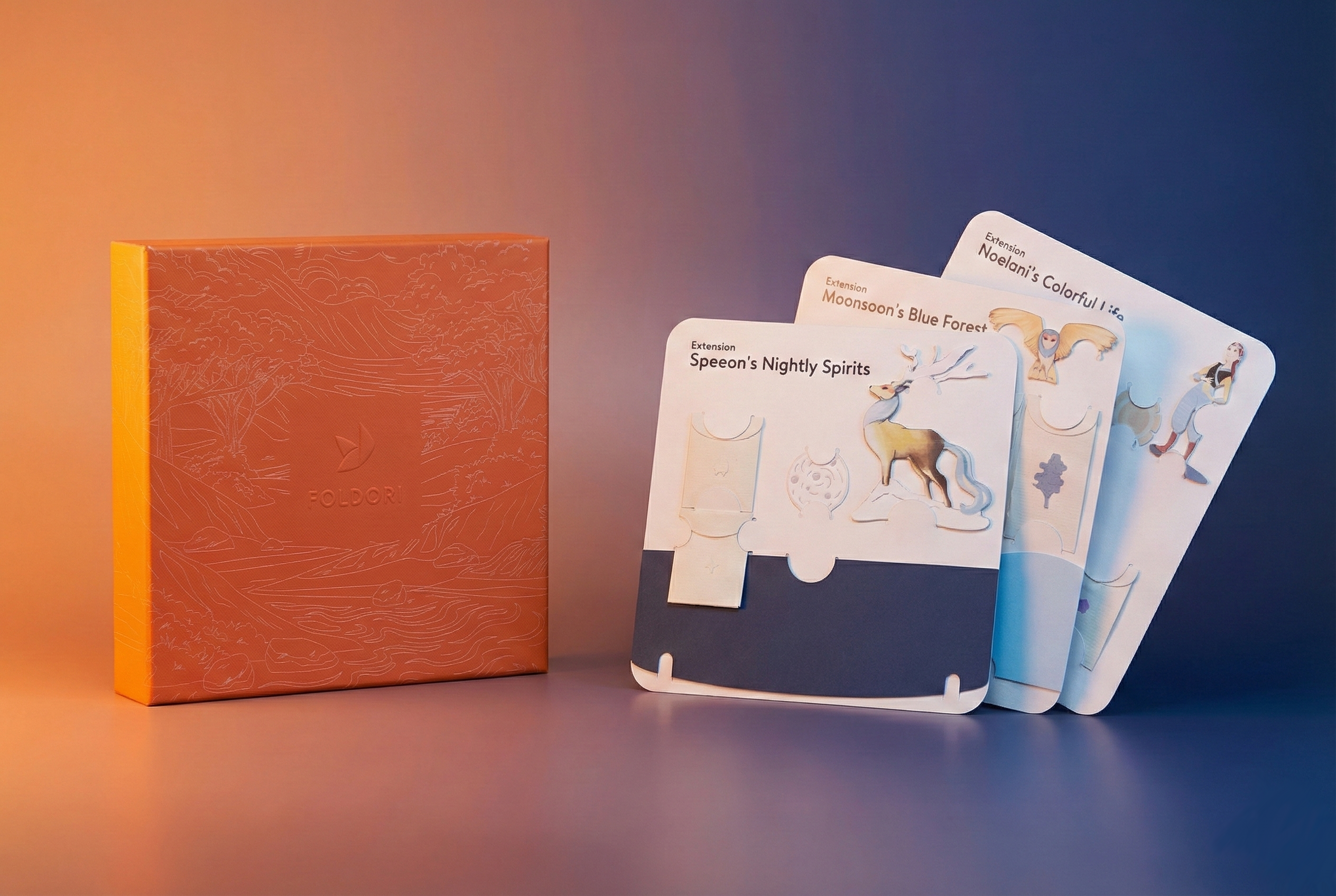
The way we arrange visual elements speaks volumes before a single word is read. In paper craft, the interplay between form, shadow, and negative space creates an immediate emotional response. This is where European artisan tradition meets contemporary interior design, where each fold becomes a deliberate visual statement. The Language of Visual Hierarchy Every paper piece tells its story through visual weight and placement. When Moonsoon, the owl guardian of the Silvia Forest, sits on your shelf, his blue presence commands attention not through size, but through the careful geometric precision of his form. This is visual hierarchy in its purest expression: using scale, colour intensity, and dimensional depth to guide the eye naturally through a composition. Consider how traditional European atelier work approaches layout: there's always a focal point, breathing room, and intentional asymmetry that feels organic rather than forced. Apply this to your paper craft display by positioning your most intricate piece (perhaps your Sunrise Dreams diorama) slightly off-centre, allowing surrounding elements to support rather than compete. The negative space matters as much as the sculpture itself. White walls aren't empty; they're a canvas that amplifies every fold and shadow. This restraint, this confidence in simplicity, separates thoughtful curation from visual clutter. Shadow as a Design Element Natural light transforms paper craft from static object to living art. The dimensional folds in each FOLDORI creation are engineered to cast deliberate shadows that shift throughout the day. Morning light might emphasize the angular precision of geometric patterns, while afternoon sun could soften the curves of Noelani's rabbits into gentle gradients. Position your pieces where indirect sunlight can interact with the paper's texture. North-facing windows in European homes provide that coveted diffused illumination: steady and flattering without harsh contrasts. If you're working with artificial lighting, warm-toned bulbs placed at oblique angles will reveal the depth and craftsmanship that defines artisan paper work. The interplay between light and shadow isn't incidental. It's fundamental to experiencing three-dimensional craft. Each crease, each fold becomes a miniature architectural event when properly illuminated. Colour Psychology in Paper Displays The colour palette you choose for your paper craft display influences mood more powerfully than most realize. FOLDORI's warm sunrise oranges, forest blues and greens, and soft creams aren't arbitrary. They come from the Sunrise Dreams story, where colour communicates place and time of day. When grouping pieces, think in tonal families rather than exact matches. Noelani's warm orange paired with sage botanical prints creates visual conversation through complementary warmth and coolness. This approach borrows from classical still life painting, where artists balanced vibrant focal points against muted supporting elements. Contrast serves purpose too. A single bold geometric piece in deep navy against pale surroundings commands attention while maintaining sophistication. The key is intentionality: every colour choice should feel deliberate, not accidental. Layout Principles from European Design Traditional European interiors master the art of layered vignettes: small, carefully composed arrangements that reward closer inspection. Apply this to paper craft by creating depth through staggered positioning. Place smaller pieces slightly forward of larger ones, or use varying shelf heights to build visual interest. The rule of thirds applies beautifully here. Divide your display area into a mental grid and position key pieces at intersection points. This creates balance that feels natural rather than forced. Notice how gallery walls in Parisian apartments often cluster pieces asymmetrically yet achieve perfect equilibrium. That's the principle at work. Texture variation adds another layer of sophistication. Pair the crisp geometry of folded paper against natural linen, weathered wood, or smooth ceramic. These material conversations (the interplay between organic and precise) elevate the entire composition beyond mere decoration into curated expression. The Art of Considered Editing Knowing what to exclude matters as much as what to include. A single remarkable piece displayed with generous surrounding space makes a stronger statement than three crowded together. This is the confidence of European design: trusting that quality needs no quantity to validate it. Rotate your displays seasonally. What resonates in winter's grey light might feel different in summer's long evenings. This practice keeps your space dynamic while honouring the hand-finished nature of each piece. Like changing artwork in an atelier, it's about creating fresh visual dialogues throughout the year. Step back regularly and assess with fresh eyes. Does each element earn its place? Does the overall composition feel intentional or accidental? The most successful arrangements look effortless, but that ease comes from careful refinement and the occasional ruthless edit. Visual enhancement isn't about adding more. It's about arranging better. Every fold in a FOLDORI creation carries intention, and displaying these pieces demands the same thoughtfulness. Through considered layout, lighting awareness, and colour sensitivity, paper craft transcends decoration to become genuine artistic expression. Your space deserves the same attention that goes into each piece you finish yourself. When visual elements align with purpose, the result isn't just attractive. It's transformative.
Read more