
Japan Papierkunst
Japanese paper art carries a millennium of tradition, from the delicate folds of origami to the layered depth of kirigami and the architectural precision of pop-up books. At FOLDORI, we draw on this heritage while building something distinctly European: multi-layered paper dioramas engineered for self-assembly, designed around original stories, and crafted from Italian acid-free paper.
The discipline behind Japanese paper craft
The Japanese approach to paper treats the material as both structural and poetic. A single fold can lock a form in place; a scored line becomes a hinge. This discipline, where engineering and aesthetics are inseparable, shapes how we think about every layer in a FOLDORI set.
Kirigami (cutting) and origami (folding) are the two pillars. One reveals form through subtraction; the other through geometry. Both rely on the paper doing the work: tension, angle, and the fiber's memory hold the shape, no adhesive required.
How FOLDORI adapts the tradition
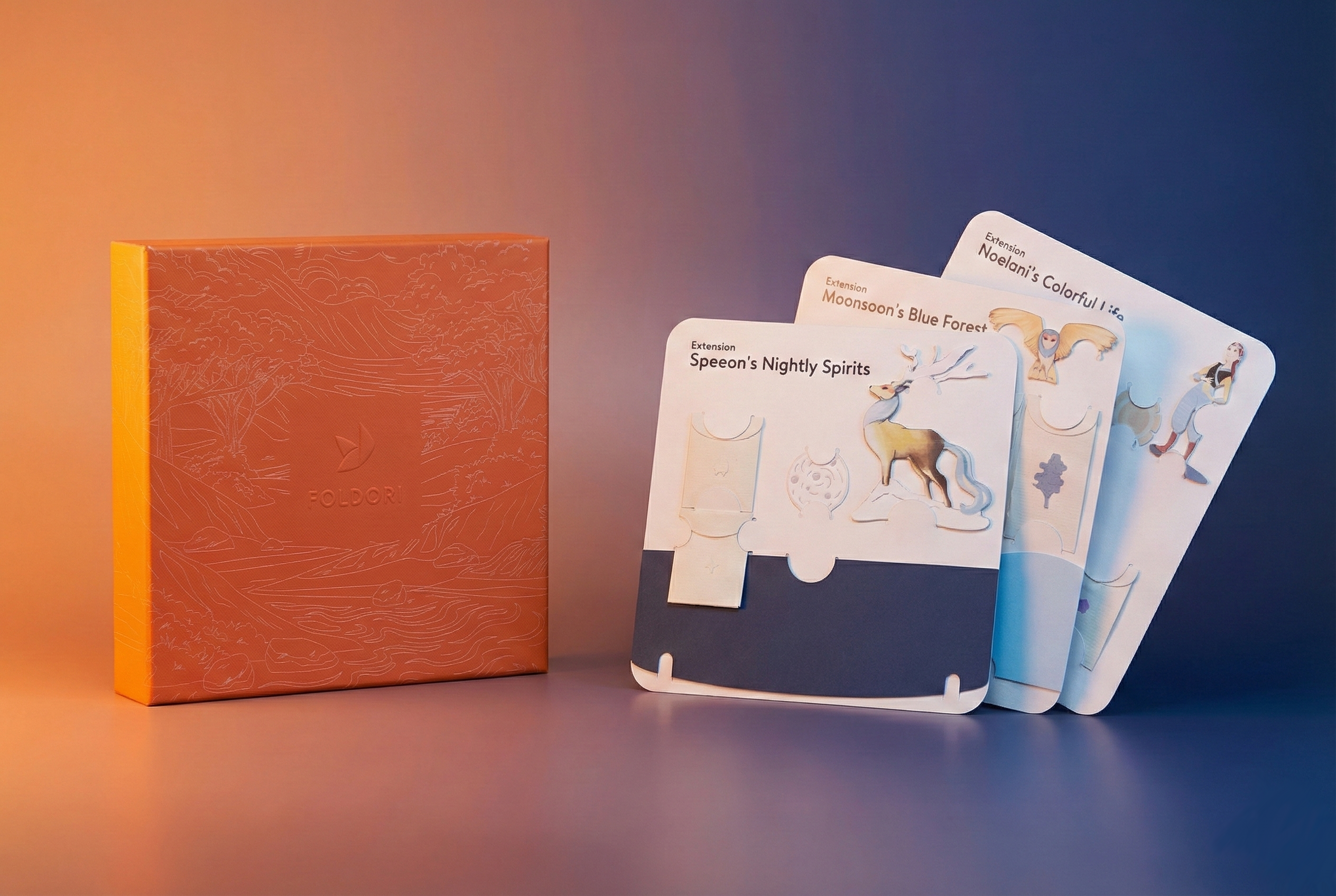
We start with the Japanese respect for material honesty, then root it in European storytelling. Our flagship collection, Sunrise Dreams, uses laser-cut Italian paper and a narrative structure borrowed from illustrated books. You assemble the diorama in under an hour; the story unfolds as the layers stack.
The Paper Belt mechanism, our zero-adhesive engineering, comes from studying traditional Japanese joinery. The folds lock under tension. The spacers set the depth. The result is a sculpture you can disassemble and rebuild without damage, because the paper itself holds the form.
Why paper, why now
In a culture saturated with screens, paper offers something rare: a material you can feel change as you work it. The Japanese understood this centuries ago. We carry it forward for a European audience that wants the craft without the intimidation.
Every FOLDORI set ships with a Design Handbook printed on Fedrigoni Old Mill stock. The step-by-step instructions are there, but so is the story behind the scene you are building. That combination, technical clarity plus narrative depth, is what we mean by story-led engineering.