
Paper Art
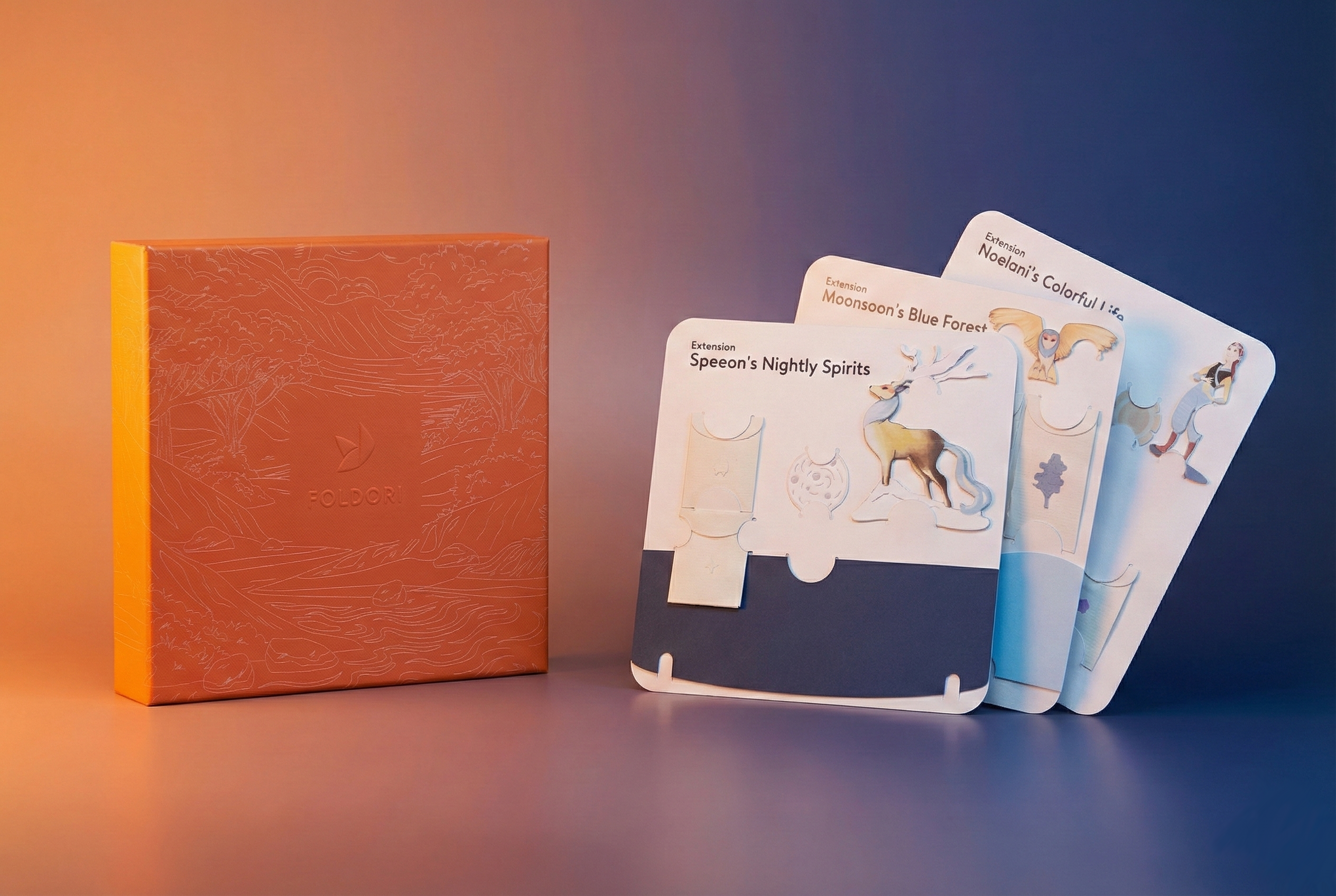
Paper art transforms flat sheets into three-dimensional sculptures, layered scenes, and multi-part dioramas through precision cutting, folding, and engineered assembly. At FOLDORI, we build paper objects you finish yourself, each set ships as laser-cut components that lock together without glue.
What defines paper art
The material is the medium. Acid-free Italian paper holds a crease the first time; long fibers mean the cut edge stays clean after a hundred folds. We work with Fedrigoni Old Mill stock because it behaves predictably under tension, the laser tolerance is tight enough that layers sit flush without forcing them. Assembly as meditation, not frustration.
Paper art spans centuries and traditions. Chinese paper-cutting (jianzhi) dates to the Han dynasty; Japanese origami formalizes the single-sheet discipline; European silhouette artists mastered the negative-space portrait in the 18th century. FOLDORI adapts these lineages for a European audience: story-led scenes you assemble at home, engineered for self-locking precision.
How we approach it
Every FOLDORI set is story-first. Sunrise Dreams materializes the opening chapter of an original tale, Moonsoon the owl, Noelani the protagonist, the forest at dawn. Ten layers of uncoated cream paper, thirty-six spacers, a Design Handbook printed on the same stock. You build the scene; the story unfolds as you do.
The engineering matters because paper is unforgiving. A score line angled wrong and the fold won't lock. A tolerance too loose and the layers shift. We prototype every fold, every tab, every friction point. The Paper Belt mechanism holds the finished sculpture under tension, no adhesive, no external frame. The object you display is the object you assembled, exactly as designed.
Why it matters
Claiming ownership of what you bring home starts with finishing the work yourself. A paper sculpture shipped pre-assembled is décor; a paper sculpture you built is yours in a different sense. The hour you spend placing layers, aligning edges, watching the scene appear, that hour is what makes it personal.
We chose paper because it rewards attention. Wood forgives rough handling; plastic hides imperfection under surface finish. Paper shows every choice. Fold it carefully and it holds. Rush it and it creases wrong. The discipline the material demands is the same discipline that makes the result worth keeping.