

Beyond The Fold
Paper Engineering Heritage: FOLDORI's European Craft
Paper engineering isn't new. The Chinese folded lanterns in the Tang dynasty; Europeans cut silhouettes in the 1700s. What changed is precision. FOLDORI ships ten-layer dioramas that lock without glue because we engineered the score angles and the Paper Belt tension in a way the old craftsmen couldn't. What paper engineering actually means Paper engineering is the discipline of making three-dimensional structures from flat sheets. The term covers pop-up books, architectural models, packaging prototypes, and what FOLDORI makes: layered story-driven dioramas. The difference between craft and engineering is repeatability. A one-off paper sculpture is craft. A design you can laser-cut fifty times with the same result is engineering. FOLDORI sits at the overlap. We hand-select Fedrigoni Old Mill 250gsm because the long fibers keep the cut edge clean after repeated folds. We engineer the score angles so the fold locks the first time. We prototype in Yangzhou and manufacture in Europe because that's where the supply chain supports both heritage techniques and modern precision. The result looks handmade; the process is measured in microns. The lineage: from Tang lanterns to laser-cut layers Yangzhou paper lanterns date to the 8th century. Craftsmen cut rice paper into geometric patterns, then folded the panels into spheres and cylinders. The lantern held its shape because the cuts were precise and the folds were deliberate. No glue. Just geometry. European silhouette artists in the 1700s worked the same principle in reverse: cut the profile first, then mount it on a backing sheet. The cuts had to be clean or the silhouette bled. By the 1800s, Victorian pop-up books layered multiple die-cut sheets with thread hinges. The pages opened to reveal castles, gardens, ships. The engineering was in the hinge placement and the layer spacing. FOLDORI inherits all three traditions. We cut like the silhouette artists, layer like the Victorian bookmakers, and lock the structure like the Yangzhou lantern-folders. The CO2 laser replaced the craft knife; Fedrigoni Old Mill replaced rice paper. The geometry is older than the Republic. Why we chose Fedrigoni Old Mill 250gsm Fedrigoni is an Italian paper mill founded in 1888. Old Mill is their uncoated cotton-fiber stock. We tested twelve paper weights before we chose 250gsm. Lighter stock (120gsm, 160gsm) folds cleanly but doesn't hold tension in a ten-layer stack. Heavier stock (300gsm, 350gsm) holds tension but the laser burns the cut edge brown. 250gsm is the point where fiber strength meets laser tolerance. The long cotton fibers absorb the laser heat without charring. The uncoated surface takes the score without cracking. A Sunrise Dreams diorama ships ten layers of Old Mill cream, thirty-six ivory spacers, and a Design Handbook printed on Old Mill 120gsm. You assemble it in under an hour. The Paper Belt mechanism holds the layers in tension. No glue. The fold angle is 38 degrees; that's the angle where the score locks without spring-back. We didn't invent that angle. We found it after four months of prototyping. The Paper Belt mechanism: tension without adhesive Victorian pop-up books used thread. Modern packaging uses tabs-and-slots. FOLDORI uses the Paper Belt. A Paper Belt is a strip of scored, folded Old Mill that wraps around two adjacent layers and locks them at a 90-degree corner. The belt is under tension. When you slide the belt into place, it compresses the spacers between the layers. The compression is what holds the corner square. If the score angle is wrong, the belt springs open. If the paper weight is wrong, the belt crushes the spacers. We engineered both variables. The result is a glue-free corner that stays locked for years. Miraki (FOLDORI's R&D Specialist) spent six weeks testing belt widths, score depths, and fold sequences before the mechanism worked repeatably. The first Sunrise Dreams prototype used 3mm belts. They slipped. The final design uses 5mm belts with a double-score fold. The belts ship pre-folded. You place them; the geometry does the rest. From prototype to production: the Yangzhou-to-Europe supply chain FOLDORI prototypes in Yangzhou because that's where the paper-lantern craftsmen are. The craftsmen understand scored folds, layered assembly, and tension structures. They don't use CAD; they fold paper and see what works. We bring their findings back to Europe and translate them into laser-cut files. The production happens in Europe because that's where Fedrigoni ships and where the CO2 lasers run at the tolerance we need. A FOLDORI diorama is a hybrid object: Chinese geometry, Italian paper, European manufacturing. The supply chain is the engineering. We don't make everything in one place because no one place has all the capabilities. Yangzhou has the heritage. Italy has the paper. Europe has the laser precision. The product is the synthesis. What you're building when you assemble a FOLDORI diorama A Sunrise Dreams diorama is ten laser-cut paper layers, each representing a different depth in a forest landscape. You stack the layers with ivory spacers between them. The spacers create the depth intervals: 5mm, 8mm, 12mm, depending on the layer position. The Paper Belts lock the stack at the corners. When you finish, you have a 220mm × 160mm × 80mm object that sits on a shelf or a desk. The object tells a story. Sunrise Dreams is about a forest at dawn. The front layer is the foreground trees. The back layer is the sky. The middle layers are the light breaking through the canopy. You built it, so you know how the depth intervals work. You see the engineering. That's what makes the story land differently than if you bought a finished sculpture. You participated in the structure. The structure is the story. Paper engineering is a lineage, not a category. FOLDORI inherited Yangzhou lantern geometry, Victorian layering discipline, and Italian paper-mill craft. We added laser precision and the Paper Belt mechanism. The result is a ten-layer diorama you can assemble in under an hour without glue. The folds lock because we engineered the score angles. The layers hold because we chose 250gsm Old Mill. The story lands because you built the structure. That's the engineering. That's the heritage. That's FOLDORI. Related reading engineering decisions geometry of tension Mastering the CO2 laser
Read moreWhat Paper Engineering Actually Is | FOLDORI
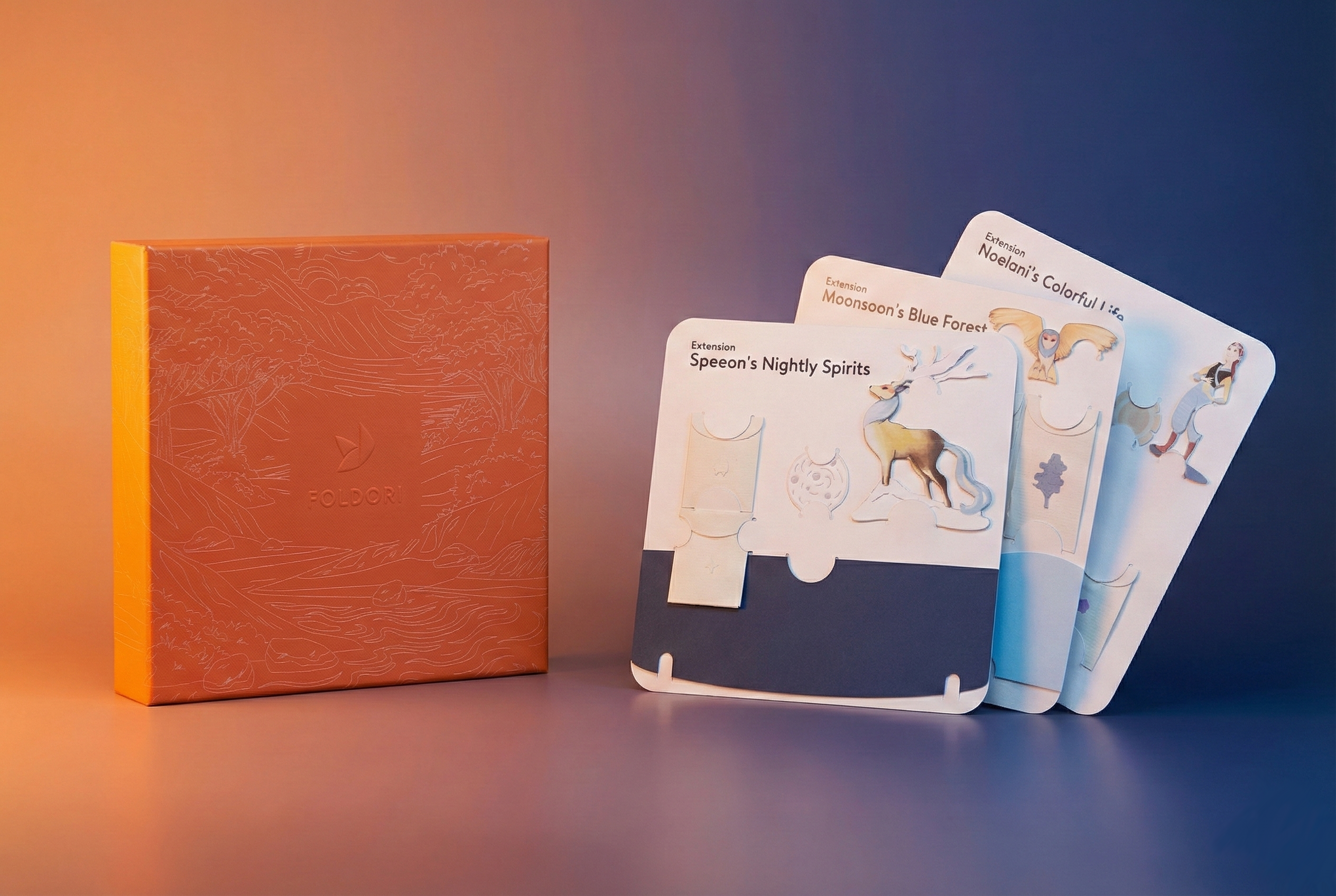
Paper engineering is the application of geometric and structural principles to flat sheets, turning them into three-dimensional objects that hold their shape without external support. It spans pop-up books, architectural models, packaging prototypes, and display sculpture. FOLDORI uses these principles on uncoated European paper to build layered objects you assemble at home. The discipline: where paper engineering came from The term 'paper engineering' entered common use in the 1980s through pop-up book production, but the practice is older. Victorian greeting cards used slotted paper mechanics in the 1860s. Japanese kirigami and origami traditions date back centuries. Architectural firms began building scale models from paper and card stock in the early 20th century because the material was fast, cheap, and precise enough to test spatial ideas before committing to construction. What separates paper engineering from paper craft is the engineering part: every fold, score, and cut does structural work. A pop-up book page is a compression mechanism; when you close the book, the structure collapses along predetermined fold lines and stores flat. When you open it, the same folds deploy the structure back into position. The paper holds memory of both states. FOLDORI applies this to display objects. Our products ship flat. You assemble them into a ten-layer diorama or a sculptural extension set. The paper holds the assembly because the folds, scores, and tension points were engineered to do that. The physics: how folds and scores actually work A fold is a bend along a line. A score is a partial cut or compression along that line, making the fold easier and more precise. The difference matters. If you fold uncoated 250gsm paper without scoring it first, the fold wanders; fibers compress unevenly and the crease is soft. If you score it, the fold locks into place along the score line within a tolerance of half a millimeter. Why does scoring work? Paper is a mat of cellulose fibers laid down during production. When you compress or cut partway through that mat, you weaken it along a line. The fibers bend at that line instead of across the whole sheet. This is why our laser-cut components snap into precise 90-degree corners without glue: the score lines were cut at the correct depth, and the fold angles were calculated to create tension when the corners meet. Grain direction is the second variable. Paper fibers align with the direction the pulp flowed across the screen during manufacturing. Folds parallel to the grain are clean. Folds perpendicular to the grain crack the fibers if the paper is thick or coated. FOLDORI uses uncoated long-fiber stock and orients every score line parallel to the grain. That is why a FOLDORI corner holds a sharp angle after a hundred assemblies and disassemblies. Load-bearing structures: why some paper objects stand and others collapse A paper structure either supports its own weight or it does not. The difference is geometry, not wishes. If you build a four-wall box from thin card stock and leave the top open, the walls bow outward under their own weight within minutes. If you add a top, the box holds. The top distributes the load. Architectural model-makers learned this in the 1920s. A building structure at 1:100 scale needs walls that stay vertical and floors that stay level. If the corners drift by two millimeters, the model reads as sloppy. The solution is triangulation: every right-angle joint gets a small diagonal brace, or the floor plate locks into slots cut into the walls. The geometry prevents drift. FOLDORI uses a different solution for layered diorama structures. Instead of bracing every joint, we use the Paper Belt mechanism: a ribbon of paper threaded through slots in each layer, holding them in parallel planes under tension. The ribbon is the load-bearing element. Each layer floats in space because the tension keeps it there. When you remove a layer, you release the tension on that section of the belt, pull the layer free, and re-tension the belt. No glue, no permanent assembly, no collapse. Precision: why half a millimeter matters FOLDORI's laser-cut components hold tolerances of ±0.15mm on the score lines and ±0.25mm on the through-cuts. These numbers sound arbitrary until you assemble a ten-layer structure and find that every corner locks at exactly 90 degrees. The precision is what makes that possible. Paper memory is the second half of the equation. Uncoated paper returns to its original shape after you bend it and release it. Coated paper stays where you folded it. For a structure that assembles and disassembles, you want memory: the paper should spring back when you remove the tension. That is why FOLDORI uses Fedrigoni Old Mill uncoated stock instead of coated art paper. The fibers remember. When we say 'engineered paper objects,' this is what we mean: the score depth was tested, the grain direction was mapped, the slot widths were calibrated, and the corner angles were calculated. The object holds because the engineering holds. How FOLDORI applies this to uncoated European paper Most paper engineering happens on coated stock or thin card because those materials behave predictably under laser-cutting and scoring. Uncoated paper is harder. The fibers are loose, the surface is textured, and the material absorbs humidity from the air. A score line cut at the correct depth in January can be too deep in August if the paper dried out. We chose uncoated paper anyway because the material quality matters more than the convenience. Fedrigoni Old Mill 250gsm is milled in Verona, Italy, from long cellulose fibers. The texture is visible. The edges stay clean when you cut them. The fold memory is strong. These qualities make the assembled object feel like something you built, not something a machine stamped out. The engineering challenge was calibration. We spent four months testing score depths, slot tolerances, and fold angles on different batches of Old Mill stock to find the settings that worked across seasonal humidity variation. The laser now cuts at a power level 12% lower than the supplier's default for 250gsm paper, because Old Mill's fiber density is higher than the default calibration assumes. That is the kind of detail that does not show up in a product photo but shows up when you fold the corner for the first time and it locks. The difference between craft kits and engineered objects A craft kit is a set of parts you assemble by following instructions. An engineered object is a structure that holds together because the geometry was designed to do that. Both can be made from paper. The difference is whether the object depends on glue and luck, or whether the object depends on the score lines doing their job. FOLDORI products are engineered objects. You can take them apart and reassemble them because the structure is not glued. The Paper Belt mechanism is a geometric solution to the problem of holding ten layers in parallel planes. The 90-degree corners are a fold-angle solution to the problem of making a right angle without a hinge. The slot widths are a tolerance solution to the problem of friction fit without permanent deformation. When we write 'paper engineering' on a product page, this is what the phrase carries: structural decisions made before the first prototype, tested through production, and verified in your hands when the corner locks on the first fold. Paper engineering is the application of physics to a material that most people think of as fragile. Folds, scores, grain direction, and load geometry turn flat sheets into structures that hold their shape, support their own weight, and assemble without glue. FOLDORI uses these principles on uncoated European paper to build objects you can take apart and reassemble without losing precision. The discipline is old; the application to home display objects is what we are building. Related reading how we engineered a 10-layer landscape Mastering the CO2 laser on 250-gram paper secrets of paper engineering
Read more


