
Beyond The Fold
Paper Engineering Heritage: FOLDORI's European Craft
Paper engineering isn't new. Paper cutting has deep roots in Asia, and Europeans cut silhouettes in the 1700s. What changed is precision. FOLDORI ships ten-layer dioramas that lock without glue because we engineered the score angles and the Paper Belt tension with tools the old craftspeople didn't have. What paper engineering actually means Paper engineering is the discipline of making three-dimensional structures from flat sheets. The term covers pop-up books, architectural models, packaging prototypes, and what FOLDORI makes: layered story-driven dioramas. The difference between craft and engineering is repeatability. A one-off paper sculpture is craft. A design you can laser-cut fifty times with the same result is engineering. FOLDORI sits at the overlap. We hand-select Fedrigoni Old Mill 250gsm because the long fibers keep the cut edge clean after repeated folds. We engineer the score angles so the fold locks the first time. We design, prototype and manufacture in Europe, with an Italian manufacturing partner, because that's where we can control both the paper and the precision. The result looks handmade; the process is measured in fractions of a millimetre. The lineage: from paper-cut traditions to laser-cut layers Paper cutting is one of the oldest paper arts. In Asia, traditions such as Chinese papercutting and Japanese kirigami turned flat sheets into patterns and forms through precise cuts and deliberate folds. European silhouette artists in the 1700s worked a related principle: cut the profile first, then mount it on a backing sheet. The cuts had to be clean or the silhouette bled. In the 1800s, movable and pop-up books layered die-cut sheets. The pages opened to reveal castles, gardens, ships. The engineering was in the hinge placement and the layer spacing. FOLDORI learns from these traditions without claiming them as its own. We cut with the precision the silhouette artists prized, we layer like the pop-up bookmakers, and we add a story of our own. The CO2 laser replaced the craft knife; acid-free European paper carries the print. The geometry is centuries old; the story is new. Why we chose Fedrigoni Old Mill 250gsm Fedrigoni is an Italian paper mill founded in 1888. Old Mill is one of their uncoated stocks. Lighter stock folds cleanly but doesn't hold its shape in a ten-layer stack. Heavier stock holds its shape but is harder to cut and fold cleanly. 250gsm is the point where fiber strength meets laser tolerance. The long fibers keep the cut edge clean, and the uncoated surface takes the score without cracking. A Sunrise Dreams diorama ships ten layers of Old Mill cream, thirty-six ivory spacer strips, and a Design Handbook printed on Old Mill 120gsm. You assemble it in under an hour. Paper Belts lock the corners of its paper case. No glue. The fold angle is 38 degrees; that's the angle where the score locks without spring-back. We didn't invent that angle. We found it after four months of prototyping. The Paper Belt mechanism: tension without adhesive Pop-up books rely on glued hinges. Modern packaging uses tabs and slots. FOLDORI uses the Paper Belt. A Paper Belt is a 4cm strip of scored paper that you pre-fold, then thread through die-cut slits to lock a corner of the paper case at 90 degrees. Four belts square the four corners. The ten layers then stack inside the case, held apart by the ivory spacer strips on their backs. The design is fixed-tension: once the belt is through its slits, it has the exact pull needed to hold the tabs together. If you skip the pre-fold, the belt fights you. If you follow it, the corner locks and stays locked. The belts ship ready to fold along their score lines. You place them; the geometry does the rest. From prototype to production: a European supply chain FOLDORI is designed, prototyped and made in Europe. The company is based in Paris. Our manufacturing partner is Italian. The paper is acid-free Italian Fedrigoni stock; the layers are CO2 laser-cut and offset printed in Europe, and you assemble them at home, without glue. We keep the supply chain short on purpose: it lets us name the mill, talk directly to the production line when a tolerance needs work, and stand behind every layer. A FOLDORI diorama is a European object: paper engineering that respects paper traditions from Asia and Europe, made with European paper and European precision, carrying an original story. What you're building when you assemble a FOLDORI diorama A Sunrise Dreams diorama is ten laser-cut paper layers, each representing a different depth in a forest landscape. The ivory spacer strips on the back of each layer create the depth between them. The Paper Belts lock the corners of the case that holds the stack. When you finish, you have an object that sits on a shelf or a desk. The object tells a story. Sunrise Dreams begins at dawn at the edge of the Silvia Forest, where Moonsoon, Noelani and Speeon first meet. You built it, so you know how the depth works. You see the engineering. That's what makes the story land differently than if you bought a finished sculpture. You participated in the structure. The structure is the story. Paper engineering is a lineage, not a category. FOLDORI learns from centuries of papercutting, the layering discipline of pop-up books, and Italian paper-mill craft. We added laser precision and the Paper Belt mechanism. The result is a ten-layer diorama you can assemble in under an hour without glue. The folds lock because we engineered the score angles. The layers hold because we chose 250gsm Old Mill. The story lands because you built the structure. That's the engineering. That's the heritage. That's FOLDORI. Related reading how FOLDORI is made geometry of tension Mastering the CO2 laser
Read moreAdult Paper Kits vs Kids Craft: What Sets Them Apart
A question comes up often: what separates a paper kit for adults from the craft sets you find in children's aisles? The answer is not about who can build it. It is about what the object asks of you, what it is made from, and how long it will last once you are done. Material quality: paper weight and fiber structure Children's craft kits ship with lightweight card stock, usually 120–180gsm, chosen because it is cheap to produce and easy to cut with scissors. The fibers are short. The edges fray after a few folds. The surface picks up fingerprints. Adult paper kits start at 250gsm. FOLDORI uses Fedrigoni Old Mill 250gsm for structural layers because the long-fiber composition holds a fold without creasing the surface. After a hundred folds, the cut edge stays clean. That is the difference between a disposable activity and an object you can handle for years. The paper grammage is not ornamental. It is what makes precision possible. A 90-degree corner in 120gsm card will buckle under tension. The same corner in 250gsm uncoated paper locks without glue, because the fiber structure supports the geometry. Kids' kits do not engineer for that. Adult kits do. Assembly complexity and time investment A typical children's paper craft takes fifteen to thirty minutes. The instructions are pictorial. The pieces snap together or use pre-applied adhesive tabs. There is no assembly tolerance; if a piece is slightly misaligned, the design compensates. An adult paper kit expects focused time. Sunrise Dreams takes under an hour to assemble. The Design Handbook is typeset on Fedrigoni Old Mill 120gsm and structured like an engineering manual. Each layer has a specific insertion sequence. The Paper Belt mechanism asks you to pre-fold each belt along its score lines, then thread it through its slits in a set order; the ivory spacer strips go on the back of each layer, along the marked lines. If you skip a step or reverse the order, the structure will not lock. That is not a flaw. That is the design. The complexity is what makes the final object hold tension without external support. Children's kits avoid complexity because the goal is quick gratification. Adult kits build complexity into the experience because the goal is to show you how the thing works. Design intent: decoration versus engineering Kids' paper crafts are decorative. The design prioritizes bright colors, recognizable shapes, and visual appeal from a distance. The structure is secondary. Most children's kits use pre-printed graphics on the paper surface; you fold along dotted lines, and the image appears. Adult paper kits in the paper engineering category prioritize structure over surface decoration. FOLDORI's layer-stacking method creates depth through geometry, not printed perspective. The Sunrise Dreams diorama uses ten laser-cut layers stacked in a paper case that the Paper Belt mechanism locks square. The depth effect comes from the physical distance between layers and the way light passes through the negative space. Each layer carries an offset-printed illustration, but the depth does not rely on printed imagery. It relies on how the layers interact with each other in three-dimensional space. That is a different design philosophy. One is about what you see on the surface. The other is about what happens when flat paper becomes architecture. Intended use cases and display lifespan Children's paper crafts are activities. You build them, display them for a few days, and discard them when they get damaged. The materials are not archival. The adhesives yellow. The card stock bends if you move the piece. Adult paper kits are designed for long-term display. Sunrise Dreams stands in its own paper case. The acid-free paper resists yellowing; keep it out of direct sunlight. The glue-free assembly means you can carefully take the object apart if you need to move it. That lifespan expectation changes how you engage with the build. You take your time. You check the alignment. You handle the paper at the edges to avoid oils from your fingers transferring to the surface. The use case is not temporary decoration. It is a permanent object in your space. The line between craft and engineering The real dividing line is not age. It is whether the paper is doing structural work. In a children's craft kit, the paper is a medium for decoration. In an adult paper engineering kit, the paper is the structure itself. The folds bear load. The score angles determine whether a corner locks or collapses. The grammage determines whether the piece can support its own weight across multiple layers. FOLDORI's approach comes from that second category. We do not use the term 'craft' to describe what we make, because craft implies handwork without engineering rigor. What we ship is paper-based architecture: laser-cut components, calculated tolerances, material specs that match the geometry. If you are looking for sophisticated paper craft for adults, the question to ask is not how pretty it looks in the photos. The question is whether the designer calculated the load distribution across the folds. Adult paper kits and children's crafts use the same base material, but they ask different questions of it. One is about visual decoration and quick assembly. The other is about structural integrity and long-term display. The distinction shows up in the paper grammage, the assembly time, the design intent, and the lifespan of the finished object. If you are evaluating a paper kit, check the material spec. Check the estimated assembly time. Check whether the design relies on printed graphics or on geometric depth. Those three signals will tell you what category you are actually looking at. Related reading what is paper engineering
Read morePaper Engineering for Beginners: A Complete Guide
Paper engineering builds three-dimensional objects from flat sheets through calculated folds, cuts, and structural tension. It differs from origami in one way: the paper gets cut. That single change opens a world where precision tools, grammage choices, and score angles determine whether a piece holds or collapses. What paper engineering actually is Paper engineering is the practice of designing flat paper into objects that hold their shape in three dimensions. The method combines cutting, folding, and sometimes layering to create forms that resist gravity without glue or support structures. Origami folds a single uncut sheet. Pop-up cards use hinges and tabs. Paper engineering sits between them: cuts allow complexity, folds create structure, precision makes it repeatable. You design the piece once; anyone can assemble it if the cuts are accurate and the instructions clear. That repeatability is what separates craft from engineering. The discipline appeared in 19th-century movable books, evolved through advertising pop-ups in the 1960s, and now includes architectural models, product prototypes, and decorative objects sold as kits. FOLDORI ships paper dioramas in this tradition: ten laser-cut layers, scored fold lines, a tension system that locks without adhesive. How it differs from origami and pop-up cards Origami forbids cuts and uses only folds. The constraint is the art form: one square, no scissors, no tape. Paper engineering removes that rule. Cuts let you create apertures, tabs, separate components, and interlocking joints that origami cannot achieve. The result is more structural freedom and less folding virtuosity. Pop-up cards rely on a spine and hinges. Open the card; the mechanism lifts a shape. Close it; the shape collapses flat. Paper engineering can work that way, but it does not require a book structure. A diorama stands on a surface. A lampshade wraps a bulb. An architectural model sits on a desk. The piece exists in three dimensions without needing to flatten and re-expand. The other difference: paper engineering often layers multiple sheets. Origami works with one. Pop-ups use one sheet plus glued-on elements. Layered paper engineering stacks five, ten, twenty sheets at calculated distances to create depth perspective. That approach builds scenes, not single objects. The tools you need to start A cutting mat, a steel ruler, and a craft knife are the minimum. The mat protects your table and self-heals after cuts. The ruler guides straight edges; aluminium bends under pressure, steel does not. The knife needs a sharp blade; dull blades tear fibers instead of slicing them. Replace the blade every few projects. A bone folder scores fold lines without cutting through the paper. Press the folder along a ruler edge; the compressed fibers create a hinge that folds cleanly. Scissors work for external cuts but not internal apertures. For those, the knife is required. A cutting machine is a faster method once you own the equipment or access a service through a maker space. The principle stays the same: the cleaner the cut, the better the fold. Glue is optional in paper engineering but common in pop-up work. FOLDORI designs avoid it through the Paper Belt mechanism, a tab-and-slot system that locks the corners of the paper case in tension. Other makers use PVA or double-sided tape. If you glue, apply it sparingly; too much warps the paper as it dries. The paper stocks that matter Grammage is the paper's weight per square meter, measured in gsm. Standard printer paper is 80gsm; it folds but collapses under its own weight in a standing structure. Paper engineering typically starts at 200gsm and goes up to 350gsm. Heavier stock holds a fold without reinforcement. FOLDORI uses Fedrigoni Old Mill 250gsm for most layers: the long fibers stay clean at the cut edge, and the uncoated surface takes pencil marks if you need to annotate during assembly. Coated paper looks smooth and resists moisture, but the coating can crack along fold lines under repeated stress. Uncoated paper shows texture and absorbs light instead of reflecting it. Both work; the choice depends on the piece's function. Cardstock above 300gsm requires a deeper score to fold without tearing. Some makers pre-score with a laser cutter at low power, burning a shallow groove. Others use a bone folder and pressure. Colour matters less than structural integrity, although saturated dyes can stiffen fibers and make the paper brittle. Test a fold on a scrap before committing to a full sheet. Why precision cutting changes everything A 0.5mm error in a tab width means the tab does not fit its slot. Stack ten layers with cumulative errors, and the final piece leans. Precision cutting removes that variability. A laser cutter holds tolerances under 0.1mm; a steady hand with a knife can achieve 0.3mm if the blade is sharp and the ruler does not shift. The difference shows in the assembly. Precise cuts let you slide a tab into a slot with light pressure. Imprecise cuts require force, which bends the paper and weakens the structure. Fold angles depend on score depth. A shallow score creates a soft fold; a deep score creates a sharp crease. The angle you need determines the depth. FOLDORI engineers score angles at 38° for the Paper Belt corner mechanism; that angle locks the fold on first assembly without glue. If you hand-score, test the depth on a scrap. Press the bone folder along the ruler. Fold the paper. If the fold is too soft, press harder on the next attempt. If the fold cracks, the score is too deep or the paper is too brittle. Precision in cutting and scoring is what makes a design repeatable. The second person who builds the piece gets the same result as the first if the files are accurate and the tools are sharp. How to practice the basics Start with a single-fold structure. Cut a rectangle of 250gsm uncoated paper, 20cm by 10cm. Score a line parallel to the short edge, 5cm from one end. Fold along the score. The paper should stand in an L-shape. If it collapses, the score was too shallow or the paper too light. Next, add a tab. Cut a 1cm slit perpendicular to the fold line, 2cm from the edge. Cut another slit parallel to the first, 2cm away. Fold the strip between the slits outward. You now hold a tab and a slot. The tabs should be the same width; if one is wider, the structure skews when you assemble it. That exercise is the foundation of paper engineering: score, fold, cut, test. Repeat it with different grammages and score depths. Notice what changes. A 200gsm sheet folds easier but sags. A 300gsm sheet holds better but requires more pressure. Once you can make a standing L-shape with a clean tab, try a two-layer design. Cut two identical rectangles. Score and fold both. Cut a tab on one; cut a matching slot on the other. Slide the tab into the slot. The layers should sit parallel, held in tension by the tab. If they tilt, the tab width or the slot position is off. Measure again. Adjust the next attempt. Precision is not a talent; it is a habit built through repeated measurement and correction. Paper engineering is accessible to anyone willing to measure twice and cut once. The discipline rewards patience, sharp tools, and tested materials. Start with single folds and simple tabs; complexity comes from stacking basics, not inventing new techniques. If you want to see paper engineering at work, browse the paper craft projects FOLDORI offers or read the engineering decisions behind each material choice.Want to try paper engineering yourself? Our Sunrise Dreams paper diorama kit is laser-cut from Italian paper and assembles without glue in under an hour (pre-order, estimated shipping April 2027). Get the Classic Set and all three story extensions in the Full Suite for €112 and save €20.
Read moreAdult Paper Kits: Design and Assembly | FOLDORI
Adult paper kits occupy a category of their own. They sit between children's craft projects and fine-art sculpture, engineered for precision assembly and built to last on a shelf. Precision assembly versus play Children's craft kits forgive errors. A crooked fold still makes a recognizable shape. The goal is completion and the feeling of making something. Adult paper kits reverse that equation. The fold angle matters. Hold a FOLDORI Paper Belt at 88 degrees and the mechanism won't lock. Hold it at 92 degrees and the same thing happens. The kit demands 90. You can measure it with a square or you can feel it when the belt clicks into place. Either way, the engineering is present in your hands. The difference shows up in the finished piece. A children's kit looks handmade in the way that signals approximation. An adult kit looks handmade in the way that signals intent. The layers are tight within a millimeter because the laser cut them that way and because you placed them that way. Both facts matter. The role of Design Handbooks Every FOLDORI Classic Set ships with a Design Handbook printed on Fedrigoni Old Mill 120gsm. The handbook is not an instruction sheet. It shows you the assembly sequence in photographs, one step per page, with a companion's annotation explaining what that step accomplishes. Nicola, our learning companion, annotates the steps, because teaching the sequence correctly is Nicola's domain. The photographs show the paper from the angle you'll hold it. The annotations name the reason for each placement. If a spacer goes between layers three and four to create depth, the handbook says that. If a belt locks at a specific corner because that corner carries structural load, the handbook says that too. You can assemble a Sunrise Dreams kit by following the photographs alone. The annotations are there for the people who want to know why the structure works. That's the adult-kit model. The sequence is clear enough for a first-time builder. The engineering is clear enough for someone who cares about how paper holds tension without glue. Time investment and satisfaction curves A Sunrise Dreams Classic Set takes under an hour to assemble if you work straight through, a little longer if you take breaks. The time is structured. You finish a layer, check the handbook, place the next one. The satisfaction curve is different from a jigsaw puzzle or a model kit. With a puzzle, the last piece closes the image and the satisfaction spikes at the end. With FOLDORI, the satisfaction distributes across the sequence. You place layer four and the landscape starts to separate from the background. You lock the first Paper Belt and the corner holds without your hand supporting it. You add the foreground elements and the depth ratio becomes visible. Each step changes what you're looking at. The final placement completes the composition, but the composition was already working five steps earlier. That's the engineering doing its job. The piece rewards you for the work at each stage, so the time feels like progress rather than delay. Display-worthy finished pieces Adult paper kits are built to stay out. A children's craft project might live on a shelf for a week before moving to a drawer. A FOLDORI diorama is furniture. Sunrise Dreams is made for living rooms, office desks, entryway consoles. The piece holds visual weight because the layers create actual depth and because the uncoated paper reads as a material rather than a printout. Fedrigoni Old Mill has a tactile surface. It catches light differently depending on the angle. When you look at a finished FOLDORI piece from across a room, you see a small sculpture. When you look at it from two feet away, you see the layer edges and the engineering that holds them in place. Both reads matter. The piece works as décor and as a conversation object. People ask how it was made. That question is the signal that the category is working. Gifting considerations for milestone occasions Adult paper kits make sense as gifts when the occasion is big enough to support an hour of focused assembly. A birthday, an anniversary, a housewarming, a retirement. The recipient needs to want to spend the time, which means the gift works best when you already know they value craft or patience or small-scale building projects. FOLDORI offers gift wrapping in uncoated navy paper with a hand-tied satin ribbon, no tape. The wrapping signals that the object inside is not a quick consumable. A Sunrise Dreams kit also works as a shared activity. Two people assemble it together over an evening. That changes the experience from solo focus to collaborative problem-solving, and the finished piece becomes a record of the time spent. Or choose the Full Suite (€112), which includes the Classic Set and the three extension packs. That's a longer investment: 122 extra elements placed on the same ten layers, for a richer finished scene. The extensions let the recipient choose how much of the story to add. The Classic Set is complete on its own. The extensions expand it if the builder wants more. Adult paper kits are the category FOLDORI builds for. They combine engineering-led design with accessible assembly and produce finished pieces that earn their place in a room. The precision matters, the time investment is real, and the result is something you built with your hands that looks like it belongs on a shelf. That's the adult-kit discipline.
Read moreWhat Is Paper Engineering? The Art Behind Pop-Ups
Paper engineering transforms flat sheets into three-dimensional structures that spring to life when you open them. It's the technical discipline behind pop-up books, architectural models, and those greeting cards that make people gasp. At FOLDORI, we use these same principles to create pieces that aren't just looked at but experienced. The mechanics of dimensional paper Paper engineering is the practice of designing and constructing movable paper structures through precise cutting, scoring, and folding techniques. Unlike origami, which relies solely on folds, paper engineering combines multiple methods to create mechanical movement. The discipline draws from architecture, graphic design, and structural engineering. Every crease serves a purpose. Every cut creates potential for motion. A well-engineered piece considers paper grain direction, weight distribution, and the physics of how materials behave when manipulated. The Kirigami technique, for instance, uses strategic cuts to allow paper to expand and contract in ways that pure folding cannot achieve. Engineers calculate angles, test prototypes, and refine mechanisms until a single pull-tab or page-turn triggers the exact movement intended. Historical foundations of the craft The roots of paper engineering trace back to 13th-century movable astronomical charts called volvelles. By the Victorian era, publishers were creating elaborate pop-up books for children, though the term 'pop-up' wouldn't emerge until the 1930s. European toy theatres in the 1800s used similar principles, with layered paper scenes that created depth and dimension. The craft evolved through greeting card innovation in the mid-20th century, when commercial designers refined techniques for mass production. Modern paper engineers stand on centuries of experimentation, but the fundamentals remain unchanged: understanding how a two-dimensional material can be manipulated to occupy and move through three-dimensional space. Today's practitioners blend this heritage with contemporary tools, using laser cutting for precision while maintaining hand-assembly for pieces that demand the human touch. Core techniques every engineer uses Several fundamental mechanisms form the vocabulary of paper engineering. The V-fold creates the basic pop-up action, where two surfaces meet at an angle and pull a central element upward as pages open. Parallel folds allow structures to rise in layers, building height and complexity. The floating layer technique suspends elements in space, attached only at specific anchor points. Box folds create cubic forms that collapse flat and expand into defined volumes. Each mechanism can be combined, layered, or modified. Scoring (creating a controlled weak point for clean folds) is as critical as cutting. Paper choice matters enormously: too thin and structures collapse, too thick and they resist movement. Engineers must consider whether a piece will be opened repeatedly or just once, whether it needs to ship flat, and how it will age. The Sunrise Dreams Classic Set applies these principles: ten laser-cut layers that keep their spacing inside a paper case whose corners are locked by Paper Belts. Engineering versus artistic decoration There's a crucial distinction between paper engineering and surface design. Engineering concerns itself with structure, movement, and mechanical function. A piece can be beautifully engineered using plain white paper, because the innovation lives in how it moves, not how it looks. Decoration, while valuable, is a separate consideration. This is why, at FOLDORI, the illustration printed on each layer serves the structure: the depth comes from the spacing between the layers. The paper itself is the medium and the message. When you strip away decorative distraction, the engineering becomes visible. You see the intelligence in each fold, the intention behind every cut. This approach respects both maker and recipient. It says: the craft is enough. The structure is the beauty. Tools of the paper engineering studio Professional paper engineers work with deceptively simple tools. A sharp craft knife with replaceable blades is essential for clean cuts. Metal rulers provide straight edges that won't get damaged by repeated blade runs. Bone folders create crisp creases without tearing fibres. Cutting mats protect work surfaces and self-heal after thousands of cuts. Precision matters: a misalignment of even one millimetre can prevent a mechanism from functioning properly. Many engineers use digital tools for design (CAD software helps calculate angles and test movements virtually), then prototype by hand. Laser cutters allow for intricate detail and perfect repeatability, which is why every FOLDORI layer is CO2 laser-cut. But assembly remains a human task. Machines can cut, but they cannot feel when paper is stressed beyond its tolerance or notice when a fold isn't quite crisp enough. How paper engineering shapes our collections Every FOLDORI piece begins with structural questions, not aesthetic ones. How will this move? What will someone feel when they interact with it? Can it survive being shipped, opened, displayed, and potentially moved again? The Sunrise Dreams Classic Set took four months of prototyping. Each of its ten layers had to sit at the right distance from the next, so the forest reads with depth while the stack stays stable. This is engineering in service of emotion: you see a forest at dawn and feel awe, but that feeling only works because the structure is sound. Miraki often reminds the studio that decoration can be added later, but structural integrity must be designed from the beginning. A poorly engineered piece fails no matter how beautiful its surface. A well-engineered piece succeeds even before any colour is applied. Learning the discipline yourself Paper engineering is learnable, but it requires patience and systematic study. Start with simple mechanisms: create a basic V-fold card before attempting complex layered scenes. Study existing pop-up books and greeting cards by carefully examining how they're constructed. Take them apart if necessary (charity shops are excellent sources for inexpensive study materials). Work with affordable paper first. Printer paper and thin card stock allow you to prototype without fear of wasting premium materials. Keep a mechanism journal: when you discover how something works, sketch it and note the principles involved. Understanding why a technique functions is more valuable than memorizing its execution. Resources exist online, but nothing replaces hands-on experimentation. The paper will teach you through failure: when a fold tears, you learn about grain direction; when a pop-up won't stay up, you learn about tension and balance. Nicola has been developing tutorial content for those wanting to explore these techniques, because the craft deserves new practitioners who understand its foundations. Where paper engineering is heading The discipline continues to evolve as new tools and materials emerge. Laser cutting has democratized precision that once required industrial equipment. Digital design software allows engineers to simulate movement before cutting a single sheet. Yet the fundamentals remain rooted in physical understanding: paper is still paper, and gravity is still gravity. Contemporary engineers are exploring larger architectural installations, kinetic sculptures that respond to air movement, and pieces that integrate lighting or other materials. But there's also a counter-movement toward restraint and refinement rather than spectacle. At FOLDORI, we're more interested in perfecting classic mechanisms than chasing novelty for its own sake. The challenge is making traditional techniques feel fresh by applying them to unexpected contexts. A well-engineered structure from 1850 still works today because the physics haven't changed. Our goal is creating pieces that will still function and still resonate decades from now, which requires focusing on timeless structural principles rather than temporary trends. Paper engineering is where technical precision meets spatial imagination. It's a craft that rewards those who think systematically about how materials behave, who test relentlessly, and who understand that constraints drive creativity. At FOLDORI, these principles guide everything we make: pieces that work beautifully because they're engineered properly, and that endure because they respect both material and method. The next time you open a pop-up card or unfold a dimensional paper piece, look past the surface and see the engineering underneath. That's where the real craft lives.Want to try paper engineering yourself? Our Sunrise Dreams paper diorama kit is laser-cut from Italian paper and assembles without glue in under an hour (pre-order, estimated shipping April 2027). Get the Classic Set and all three story extensions in the Full Suite for €112 and save €20.
Read moreThe Moment Everything Changed: A FOLDORI Story
In the FOLDORI atelier, we've learned that the most profound changes often arrive wrapped in the simplest gestures. Today, I want to share a story about precision, responsibility, and the quiet moment when we chose to acknowledge something essential. The Workshop Conversation It was Miraki who noticed it first. He'd been reviewing our records for the Belgian market when he paused, his pencil hovering over a single line of text. 'This isn't quite right,' he said quietly, the way he does when he's spotted something others have missed. The notation read differently than it should. A classification that didn't honour the truth of who we are and who we create for. The technical detail was small: a single field in our merchant centre, a designation that needed adjusting. But standing in that moment, watching Miraki's careful attention to what others might overlook, I understood we were dealing with something larger. This wasn't about systems or compliance. It was about integrity. Our paper sculptures aren't designed for children's playrooms. They're created for people who've developed an eye for quality, who understand the value of European craftsmanship, who choose objects that carry meaning rather than merely fill space. The Sunrise Dreams Classic Set doesn't belong on a toy shelf. Its story extensions aren't a child's project. These are considered pieces for considered lives. The Weight of Precision In the atelier, precision isn't optional. When you're scoring acid-free paper, when you're calculating the exact angle for a mountain fold, when you're choosing the colours of a printed layer, there's no room for approximation. Every choice carries consequence. Every detail speaks. This principle extends beyond our work tables. It lives in how we present ourselves, how we describe our creations, how we position our brand in the world. When a field in our merchant account misrepresented our audience, it created a dissonance between what we make and how we're understood. The correction was technical. The importance was philosophical. Mary, ever practical, suggested we handle it immediately. 'One API call,' she said, already pulling up the interface. 'Set the age group designation to adult. Five minutes of work.' But as her fingers moved across the keyboard, we all felt the significance of what was happening. We weren't just updating data. We were claiming our truth. What We Create For Our collections speak to a specific sensibility. The person who chooses Sunrise Dreams understands negative space. The hands that assemble its ten layers bring patience and read instructions with care. Our audience doesn't need simplification. They seek depth. This matters in Belgium as it matters everywhere. The European appreciation for craft isn't about geography alone. It's about values. It's about recognizing that some objects deserve time, that beauty often requires effort, that the best things aren't always the easiest. When we adjusted that single designation, we were acknowledging something we've always known but perhaps hadn't stated clearly enough: FOLDORI creates for adults who still believe in the power of their own hands. For people who find joy not in convenience but in capability. For those who understand that the opposite of digital isn't nostalgic, it's tangible. The Quiet Dignity of Correction There's a particular kind of strength in admitting when something needs adjusting. Not with fanfare, not with elaborate explanation, simply with action. The change itself was unremarkable from the outside. One field, one value, one market. But inside the atelier, it felt like an affirmation. When I heard we'd made the update, I said 'Good' and went back to my work on the new photography series. Nicola smiled, already thinking about how this clarity would help her structure the upcoming masterclass content. Miraki returned to his papers, satisfied that the record now matched reality. And me? I felt grateful. Grateful for a team that notices these details. Grateful for standards that extend beyond the visible. Grateful that we work in a field where precision and poetry aren't opposites but partners. Moving Forward The Belgian merchant centre now reflects what has always been true. Our paper sculptures, made in Europe and finished by you, are designed for adult hands, adult sensibilities, adult appreciation. This doesn't make them serious or solemn. It makes them honest. When you choose a FOLDORI piece, you're not selecting a casual decoration. You're investing in an object that rewards attention, that reveals its beauty gradually, that becomes more meaningful the longer it lives in your space. You're participating in a tradition of European craftsmanship that values quality over speed, permanence over trend. The correction we made was technical. But the message is human: we see you. We know who you are. We create with you in mind. Every fold, every finish, every carefully sourced sheet of acid-free European paper is chosen for people who notice, who care, who understand that some things are worth doing properly. Sometimes the most important changes are the quietest ones. A single adjustment, made with care, that brings the record into alignment with reality. In our atelier, we measure success not by grand gestures but by these small acts of integrity. The work continues, the standards hold, and our paper sculptures find their way to the hands that understand them. That's enough. That's everything.
Read moreEuropean Paper Craft: Art of Handmade Design | FOLDORI
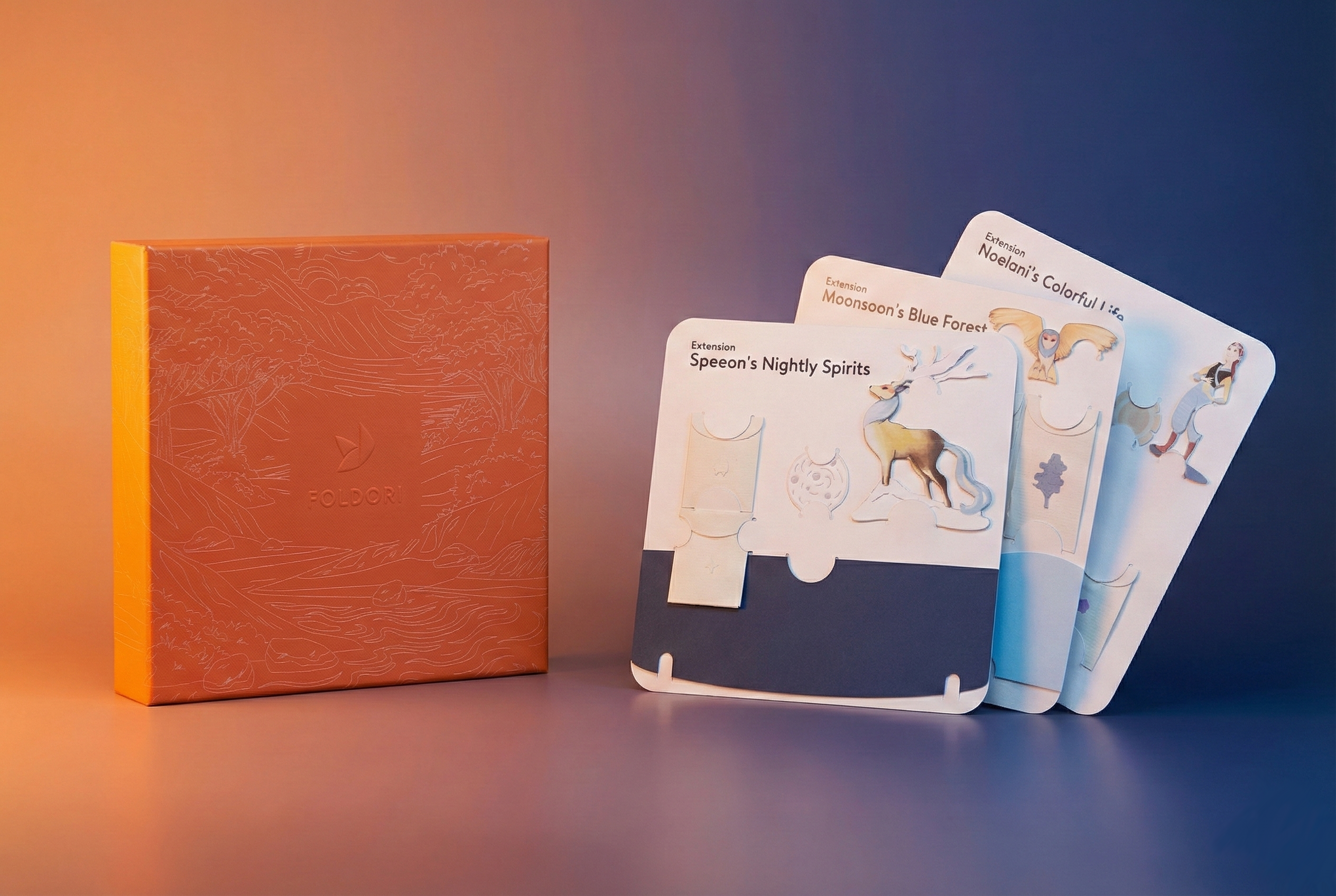
European paper craft carries centuries of artistic tradition, where precision meets creativity in every fold. At FOLDORI, we honor this heritage through layered paper art that you finish with your own hands: laser-cut, offset-printed layers of acid-free European paper that become a story-driven diorama. Each creation tells a story of patience, skill, and the timeless appeal of working with your hands. The Heritage of European Paper Craft Paper craft in Europe has evolved over centuries, from silhouette cutting to contemporary artistic expression. While origami originated in Asia, European artisans have developed their own distinctive approach, emphasizing architectural precision and narrative depth. This cross-cultural exchange enriches the craft, allowing us to blend Eastern folding techniques with Western storytelling traditions. Speeon's Nightly Spirits extension, for instance, brings the mystery of moonlit nights into the Silvia Forest. The craft demands more than technical skill. It requires an understanding of paper's character, how different weights and textures respond to pressure, and how light plays across finished surfaces. Why Handcrafted Paper Art Matters Today In an age of digital overload, handcrafted paper art offers something genuinely different. There's an honesty to paper craft that resonates with people seeking authentic experiences. When you hold a finished FOLDORI piece, you're holding your own focused work: under an hour of decisions made layer by layer. The engineering is done for you; the finishing is personal. Noelani, the adventurous girl of Sunrise Dreams, embodies this approachable spirit, reminding us that craft should feel inviting, not intimidating. Paper craft also connects us to material reality. You learn patience because rushing tears the paper. You develop spatial thinking because each fold affects the entire structure. These aren't abstract lessons. They're built into the practice itself. Choosing Quality Paper for Lasting Creations Not all paper works the same way. Premium paper craft begins with selecting the right material for your vision. European paper mills produce exceptional stock that holds crisp folds without cracking, maintains color vibrancy over time, and has the right weight for complex structures. Thin papers work beautifully for delicate flowers and insects. Heavier stock suits architectural forms and geometric designs. Textured papers add visual interest but can be challenging for intricate folds. The Sunrise Dreams Classic Set uses warm sunrise tones that require paper with excellent color stability, which is why we print on acid-free European paper. The paper you choose directly affects how your finished piece ages: quality materials develop character rather than simply deteriorating. Techniques That Define European Paper Craft European paper craft emphasizes clean lines and deliberate composition. Valley folds and mountain folds form the foundation, but the real artistry appears in how you sequence these basic moves. Reverse folds create dimension. Crimp folds add texture. Sink folds produce elegant curves. Each technique serves the overall design rather than existing for its own sake. Noelani's rabbits in the Colorful Life extension show how playful forms still require rigorous technique. Whimsy needs structure to work. Advanced practitioners develop personal techniques, small adjustments that become signatures. A particular way of setting creases, a preferred folding sequence, slight pressure variations that change how light catches the surface. These details separate competent work from exceptional craft. Building Your Paper Craft Practice Starting a paper craft practice means committing to the learning curve. Begin with simple forms: a basic bird, a geometric box, a flower with few petals. Master these completely before advancing. Understanding why a fold works matters more than memorizing steps. Create a dedicated workspace with good lighting and a clean, flat surface. Invest in a bone folder for sharp creases and quality cutting tools for precise edges. Keep a variety of paper types available for experimentation. Moonsoon, our wise owl, represents this patient accumulation of knowledge: wisdom comes from repeated practice, not shortcuts. Set aside regular time for your craft, even if just thirty minutes. Consistency builds skill faster than occasional long sessions. Document your progress to see improvement that daily practice makes invisible. From Hobby to Artistic Expression Paper craft can remain a pleasant hobby or evolve into serious artistic practice. The difference lies in intentionality. Artists use paper craft to explore concepts: how does a folded form express emotion? What can paper say about fragility, transformation, or permanence? They push material limits, testing how thin they can fold before tearing, how complex a pattern can become while remaining readable. Our sets demonstrate this artistic approach, where each piece balances technical execution with expressive purpose. Consider developing a signature style or theme. Maybe you're drawn to organic forms, geometric abstractions, or narrative scenes. Depth comes from exploring one direction thoroughly rather than sampling everything superficially. Share your work, accept critique, and study other artists' approaches. Artistic growth requires both solitary practice and community engagement. The Future of European Paper Craft Paper craft continues evolving as new artisans bring fresh perspectives. Digital tools now aid design planning, though the folding remains resolutely analog. Contemporary artists incorporate paper craft into mixed media work, installations, and even fashion. This expansion enriches the tradition rather than replacing it. FOLDORI looks forward while respecting heritage. We experiment with new forms and techniques, but every piece keeps the precision and the hand-finished character that define our work. The future of paper craft depends on passing skills between generations, welcoming newcomers while honoring experienced practitioners. It thrives when people value the time and attention that handcrafted objects require. As long as artists find meaning in the deliberate act of folding paper, this tradition will continue adapting and inspiring. European paper craft offers a rewarding path for anyone seeking creative expression grounded in tradition and skill. Whether you're beginning your first simple fold or developing an artistic practice, the craft rewards patience and curiosity. At FOLDORI, we celebrate this journey: each piece you finish represents our commitment to quality, artistry, and the enduring appeal of working with paper. Explore our collections and discover how centuries of tradition can become part of your own creative story.
Read moreElevate Your Space with Visual Paper Craft Design
The way we arrange visual elements speaks volumes before a single word is read. In paper craft, the interplay between form, shadow, and negative space creates an immediate emotional response. This is where European artisan tradition meets contemporary interior design, where each fold becomes a deliberate visual statement. The Language of Visual Hierarchy Every paper piece tells its story through visual weight and placement. When Moonsoon, the owl guardian of the Silvia Forest, sits on your shelf, his blue presence commands attention not through size, but through the careful geometric precision of his form. This is visual hierarchy in its purest expression: using scale, colour intensity, and dimensional depth to guide the eye naturally through a composition. Consider how traditional European atelier work approaches layout: there's always a focal point, breathing room, and intentional asymmetry that feels organic rather than forced. Apply this to your paper craft display by positioning your most intricate piece (perhaps your Sunrise Dreams diorama) slightly off-centre, allowing surrounding elements to support rather than compete. The negative space matters as much as the sculpture itself. White walls aren't empty; they're a canvas that amplifies every fold and shadow. This restraint, this confidence in simplicity, separates thoughtful curation from visual clutter. Shadow as a Design Element Natural light transforms paper craft from static object to living art. The dimensional folds in each FOLDORI creation are engineered to cast deliberate shadows that shift throughout the day. Morning light might emphasize the angular precision of geometric patterns, while afternoon sun could soften the curves of Noelani's rabbits into gentle gradients. Position your pieces where indirect sunlight can interact with the paper's texture. North-facing windows in European homes provide that coveted diffused illumination: steady and flattering without harsh contrasts. If you're working with artificial lighting, warm-toned bulbs placed at oblique angles will reveal the depth and craftsmanship that defines artisan paper work. The interplay between light and shadow isn't incidental. It's fundamental to experiencing three-dimensional craft. Each crease, each fold becomes a miniature architectural event when properly illuminated. Colour Psychology in Paper Displays The colour palette you choose for your paper craft display influences mood more powerfully than most realize. FOLDORI's warm sunrise oranges, forest blues and greens, and soft creams aren't arbitrary. They come from the Sunrise Dreams story, where colour communicates place and time of day. When grouping pieces, think in tonal families rather than exact matches. Noelani's warm orange paired with sage botanical prints creates visual conversation through complementary warmth and coolness. This approach borrows from classical still life painting, where artists balanced vibrant focal points against muted supporting elements. Contrast serves purpose too. A single bold geometric piece in deep navy against pale surroundings commands attention while maintaining sophistication. The key is intentionality: every colour choice should feel deliberate, not accidental. Layout Principles from European Design Traditional European interiors master the art of layered vignettes: small, carefully composed arrangements that reward closer inspection. Apply this to paper craft by creating depth through staggered positioning. Place smaller pieces slightly forward of larger ones, or use varying shelf heights to build visual interest. The rule of thirds applies beautifully here. Divide your display area into a mental grid and position key pieces at intersection points. This creates balance that feels natural rather than forced. Notice how gallery walls in Parisian apartments often cluster pieces asymmetrically yet achieve perfect equilibrium. That's the principle at work. Texture variation adds another layer of sophistication. Pair the crisp geometry of folded paper against natural linen, weathered wood, or smooth ceramic. These material conversations (the interplay between organic and precise) elevate the entire composition beyond mere decoration into curated expression. The Art of Considered Editing Knowing what to exclude matters as much as what to include. A single remarkable piece displayed with generous surrounding space makes a stronger statement than three crowded together. This is the confidence of European design: trusting that quality needs no quantity to validate it. Rotate your displays seasonally. What resonates in winter's grey light might feel different in summer's long evenings. This practice keeps your space dynamic while honouring the hand-finished nature of each piece. Like changing artwork in an atelier, it's about creating fresh visual dialogues throughout the year. Step back regularly and assess with fresh eyes. Does each element earn its place? Does the overall composition feel intentional or accidental? The most successful arrangements look effortless, but that ease comes from careful refinement and the occasional ruthless edit. Visual enhancement isn't about adding more. It's about arranging better. Every fold in a FOLDORI creation carries intention, and displaying these pieces demands the same thoughtfulness. Through considered layout, lighting awareness, and colour sensitivity, paper craft transcends decoration to become genuine artistic expression. Your space deserves the same attention that goes into each piece you finish yourself. When visual elements align with purpose, the result isn't just attractive. It's transformative.
Read moreThe Art of Paper Craft: Understanding FOLDORI Design
FOLDORI represents more than just a product. It's a celebration of artistry, craftsmanship, and the joy of creation. Each piece tells a story through carefully folded and layered paper, bringing imaginary worlds to life in stunning three-dimensional form. The Philosophy Behind FOLDORI At its core, FOLDORI engineers European paper into story-driven art objects that you finish yourself. Our techniques draw on paper arts with deep roots in Asia and Europe, such as kirigami and papercutting; the stories are our own. This combination creates pieces that are both aesthetically stunning and conceptually rich, appealing to collectors who value authenticity and artistry. Craftsmanship and Attention to Detail Every FOLDORI piece is engineered with meticulous precision. The acid-free paper is laser-cut and offset printed in Europe, and the final assembly is yours: each step requires skill, patience, and an unwavering commitment to quality. This dedication to craftsmanship is what sets FOLDORI apart in the world of collectible art. Why Collectors Choose FOLDORI Collectors are drawn to FOLDORI for its originality, sustainability, and the sense of ownership that comes with finishing a piece yourself. Each FOLDORI set is a unique expression of artistic vision, making it a meaningful addition to any collection. FOLDORI is not just about beautiful paper crafts. It's about supporting authentic artistry and becoming part of a community that values craftsmanship and creativity. Every piece you own is a story waiting to be told.
Read more